Alberta to protect Castle wilderness area north of Waterton-Glacier Park

A couple of weeks ago, Alberta announced plans to protect the Castle wilderness region. Since then, the general press has picked up on the story, including the below AP piece.

Note that this is not the proposed westward extension of Waterton Park into the Canadian Flathead drainage that has seen so much discussion lately . . .

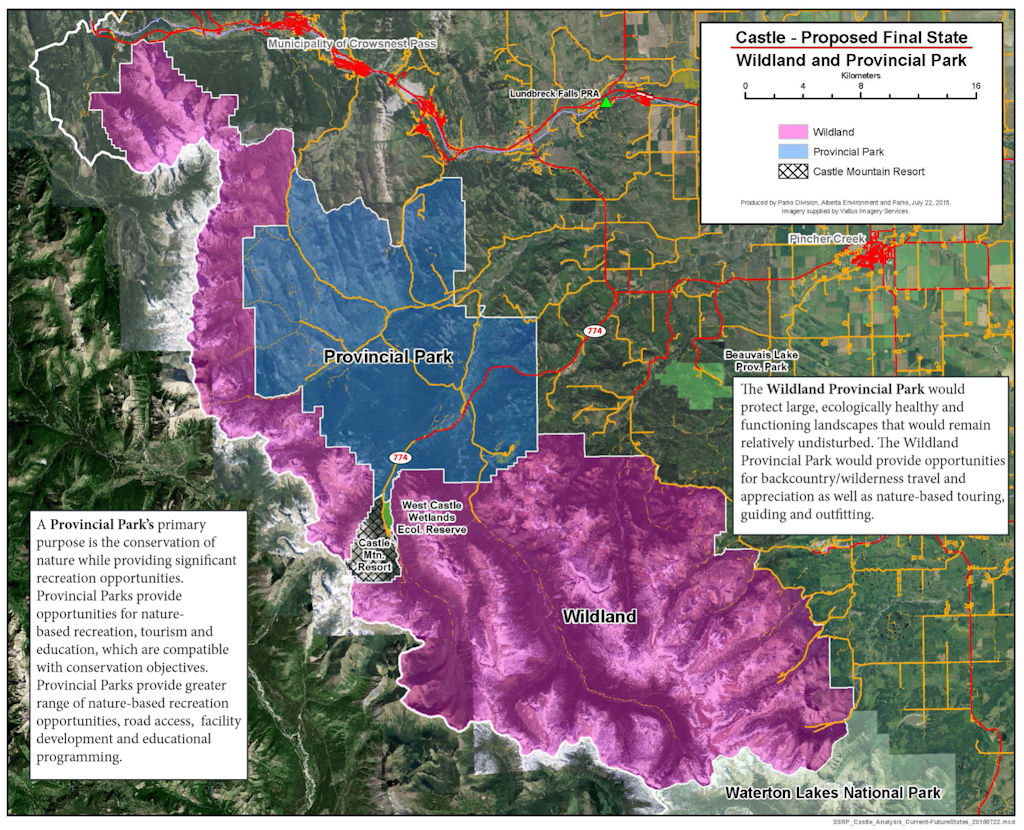
The announcement of two new parks in Alberta has delighted environmental groups that have been fighting decades for their creation.

But the news that it will be shut out of more than 386 square miles of the Castle wilderness region in the province’s southwest corner has angered the forestry industry. “It feels to us a bit like we’re being vilified,” Brock Mulligan of the Alberta Forest Products Association said.

The parks created by the NDP government are almost twice as big as those proposed by the previous Conservative government for the same region. They will also cover valleys and wetlands, while the previous proposal focused on high alpine areas. “It’s almost night and day,” said Sean Nichols of the Alberta Wilderness Association. “This one goes so much further.”

Read more . . .

Castle Wildland and Park - Final
Castle Wildland and Park – Final

Download the full map (PDF – 1.24MB)

Feds say wildfire big threat to sage grouse

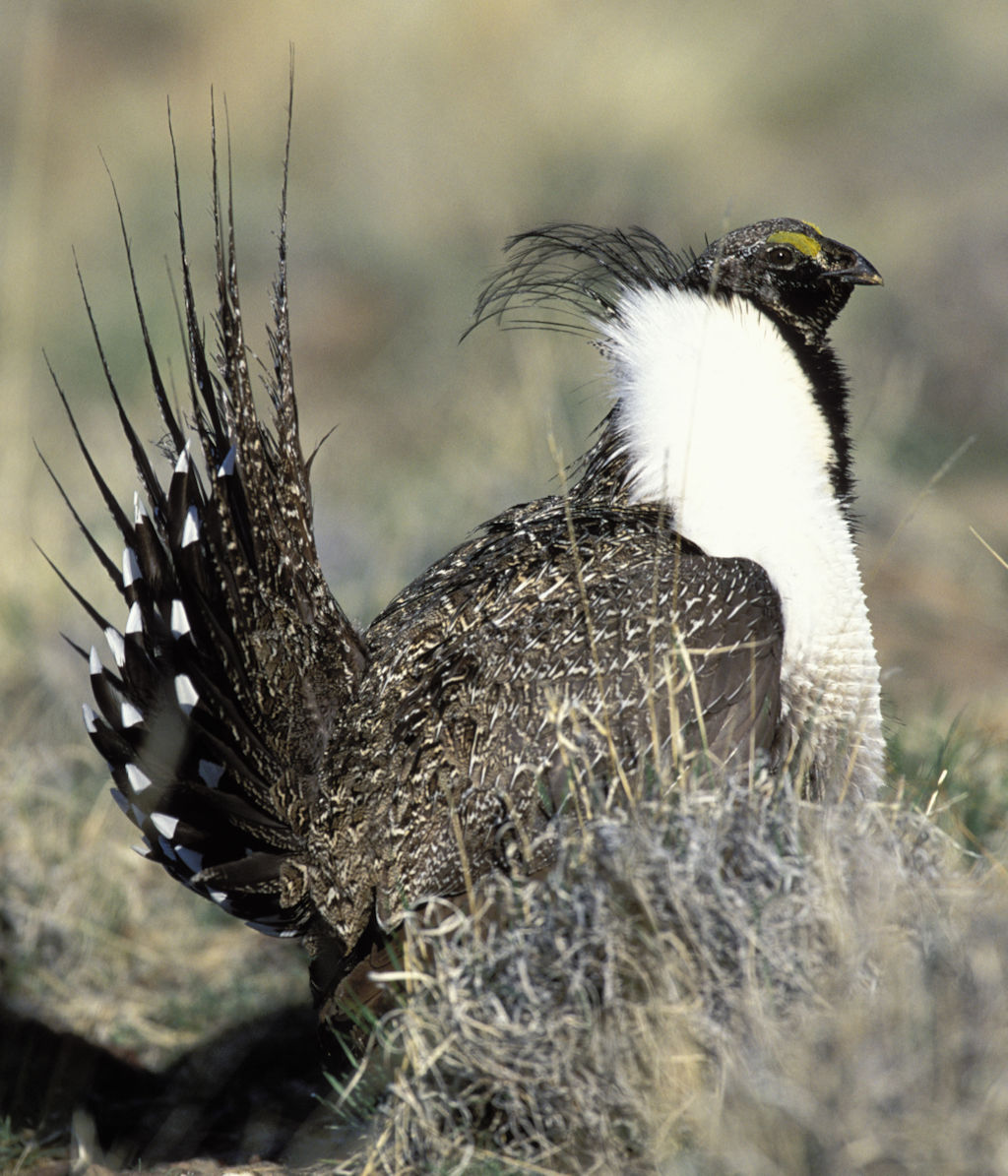
Sage Grouse

Yet another factor to consider in sage grouse preservation efforts . . .

If increasingly destructive wildfires in the Great Basin can’t be stopped, the sage grouse population will be cut in half over the next three decades, scientists say.

A report released Thursday by the U.S. Geological Survey comes just ahead of a court-ordered Sept. 30 deadline faced by the U.S. Fish and Wildlife Service to decide whether sage grouse need protection under the Endangered Species Act. Experts say such a listing could damage Western states’ economies.

“The sagebrush steppe and sagebrush ecosystem are in trouble,” said Matt Brooks, a fire ecologist with the USGS and one of the report’s authors.

Read more . . .

Feds to rule on western glacier stonefly endangerment within a year

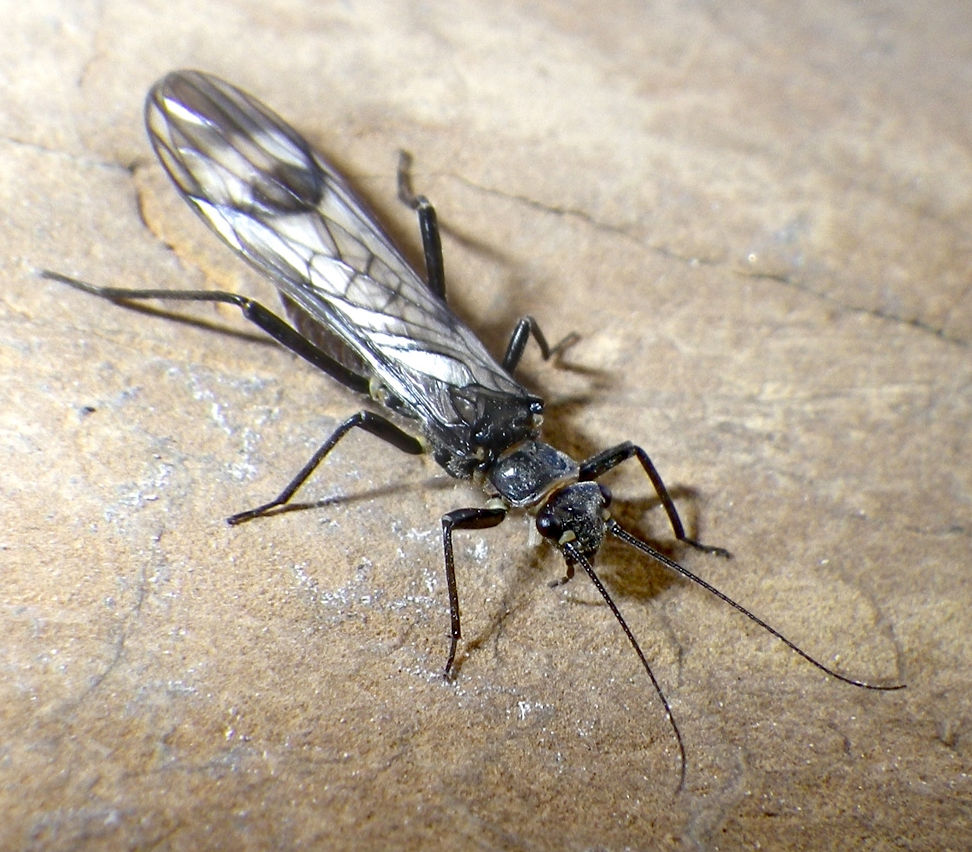
Western Glacier Stonefly  (Zapada glacier) - Joe Giersch, USGS
Western Glacier Stonefly (Zapada glacier) – Joe Giersch, USGS

From today’s Flathead Beacon . . .

The U.S. Fish and Wildlife Service has agreed to decide whether a rare aquatic insect that’s found only in Glacier National Park should be protected under the Endangered Species Act within the year.

The Missoulian reports that in a settlement with the Center for Biological Diversity, the federal agency agreed to make a decision by Sept. 30, 2016. The western glacier stonefly is one of 10 species of birds, fish and invertebrates the agency has agreed to rule on.

The stoneflies live in streams fed by cold water from glaciers in northwest Montana. Those glaciers are predicted to disappear by 2030, in part due to climate change. Researchers say the stoneflies also could disappear.

Read more . . .

Frank Vitale: Badger-Two Medicine is no place to drill

Frank Vitale says his piece
Frank Vitale

NFPA member Frank Vitale has a nice op-ed in today’s Daily Inter Lake concerning drilling in the Badger-Two Medicine region . . .

The Blackfeet call it “Mistakis,” the Backbone of the World. The Continental Divide snakes its way through this land also known as the Badger-Two Medicine. It is the cornerstone of the Blackfeet creation story.

I have ridden, hiked and hunted through this area and know it well. It is some of the wildest country in the Northern Rockies. It lies between Glacier National Park, the Bob Marshall Wilderness and the Great Bear Wilderness. It is one of the largest unprotected roadless areas in the state at 165,588 acres.

The Badger-Two Medicine is a rugged, remote, pristine ecosystem that’s home to grizzlies and black bears, wolves, mountain lions, wolverines and lynx. Moose, bighorn sheep, mountain goats, mule deer and whitetail deer and one of the largest herds of elk on the northern Rocky Mountain Front (numbering around 800 head) also live here. Its cold rivers and streams support some of the last pure populations of westslope cutthroat trout east of the Continental Divide.

The Badger and Two Medicine rivers spill out on the high prairies. Life zones range from the alpine and montane forests to short-grass prairies where grizzlies and antelope intermix.

This is not a place to drill for oil or gas. No mitigation can avoid the negative impacts of oil and gas exploration in this sacred and wild land.

All fire restrictions rescinded (including Flathead County finally)

Here’s the official press release on the lifting of fire restrictions for this corner of Montana. Note that Flathead County finally got with the program yesterday . . .


Date: September 8, 2015
Contact: Lisa Osborn  , 406-295-7558
Contact: Jeff Stevenson , 406-283-7795

Northern Rockies Coordination Group Kalispell Area Interagency News Release

Libby,MT.—All Fire Restrictions will be rescinded across North West Montana.Jurisdictions include:

  • Flathead National Forest
  • Kootenai National Forest
  • Bob Marshall Wilderness Lands within the Flathead National Forest
  • Glacier National Park
  • U.S.Fish & Wildlife Service
  • MT-DNRC Northwestern Land Office
  • Montana Fish Wildlife and Parks Region 1
  • Counties:Flathead, Lake (outside of Confederated Salish & Kootenai Tribe), Lincoln, and Sanders

On most of the jurisdiction listed above all fire restrictions have been rescinded effective immediately. The Flathead County Commissioners will meet on Thursday to decide whether to rescind restrictions in Flathead County. [they did – editor]

Please remember that even though fire restrictions have been rescinded fire season is still active. There are many fires burning in the area so you may still see smoke and flames within fire areas. There are many fire area closures please call your local Forest Service, DNRC or county fire department office for more information. Remember that you must stay out of closure areas until the closure is lifted by the land management agency.

At this time no open burning is allowed.

As hunting season begins, land managers want to remind hunters to practice wildfire safety while enjoying the outdoors. The Kalispell area fire restrictions group isurging caution for those participating in hunting and other outdoor activities to avoid sparking a fire. Just one small spark/ember from an unattended warming fire, muzzle of a gun or a hot exhaust pipe on a vehicle can ignite the dry grass.Please refrain from building campfires/warming fires during windy or dry conditio.

With that in mind, here are a few suggestions to avoid sparking a wildfire:

  • Keep water nearby when welding on stands.
  • When shooting close to the ground, be sure there is no dry grass or tinder in front of your muzzle. Though rare, it’s not impossible for a shot to ignite a fire.
  • Use properly maintained spark arresters on all power equipment.
  • Never leave a campfire or warming fire unattended, even for a few minutes. Be sure to completely extinguish campfires/warming fires when ready to go.
  • Keep a bucket, a shovel and a fire extinguisher in your vehicle and at your camp.
  • Be aware of area fire restrictions.
  • Be mindful of where you drive or park and stay on designated trails. Avoid parking on dry brush or grass, since your exhaust system can ignite the vegetation.

Please keep wildfire safety in mind and have a safe and memorable hunting experience.

Montana orders sage grouse conservation plan

Sage Grouse
Sage Grouse

Montana enacts a sage grouse conservation plan without waiting for the feds . . .

Montana Gov. Steve Bullock has ordered state agencies to enact a program to conserve greater sage grouse populations by the start of next year as federal officials consider whether more sweeping protections are needed.

The order issued Tuesday follows on a 2014 grouse conservation plan that places some restrictions on oil and gas drilling and other activities blamed for driving down sage grouse numbers.

Critics of the state plan say it has too many loopholes allowing companies to get around the restrictions.

Read more . . .

Fire restrictions lifted in almost all areas of Northwest Montana

Pretty much all fire restrictions (Stage I and Stage II) have been rescinded in this corner of Montana except for Flathead County proper. Chances are, the Flathead County Commissioners will get around to lifting restrictions for the county on Thursday.

There is no open burning, however. That will have to wait until October, if not later.

See also: Most fire restrictions removed (Daily Inter Lake – paywall)

Badger Two-Medicine hearing draws overwhelming support for preservation

Two Medicine Lake
Two Medicine Lake – Flikr User Phil’s Pixels

There was a big turnout to oppose drilling in the Badger-Two Medicine region at the Advisory Council on Historic Preservation hearing in Choteau. Among many other groups and organizations, the NFPA had several representatives there . . .

A Sept. 2 meeting held by the Advisory Council on Historic Preservation in Choteau featured overwhelming support for the withdrawal of leases on the Badger-Two Medicine, an area with cultural and ecological linkages to the Blackfeet Nation and Glacier National Park.

In addition to the public testimony, letters of support for lease cancellation by Gov. Steve Bullock, the Glacier County Commissioners and seven former Glacier Park superintendents were submitted.

The meeting was the latest step by the Blackfeet tribe and a coalition of conservation organizations to interdict an exploratory oil well proposed by Louisiana-based Solenex LLC, which acquired the energy lease in 1982. The efforts to drill have long been delayed by legal challenges, and Solenex has filed a lawsuit arguing the delays have been unreasonable.

Read more . . .

Northeast Kootenai Complex – Marston Fire Update – September 8, 2015

Marston Fire photo by Stonehenge Air Museum, Aug 28, 2015


Here’s this morning’s update on the Marston Fire, the only remaining wildfire of note in the Northeast Kootenai Complex. Activity is winding down. The cool, wet weather has really had an impact on fire behavior . . .

Murphy Lake, MT – The Northeast Kootenai Complex – The Marston Fire activity has decreased with the recent rains and increased relative humidity. The fire continues to be monitored, although suppression repair is now being implemented. Handline constructed by firefighters is being repaired to improve erosion within the fire perimeter. The eastern side of the fire is extremely difficult due to terrain and poor access which drastically limits the ability to use direct fire suppression tactics because of the danger to firefighting resources. The large fuel moistures are still low. The fire behavior continues to be minimal, only smoldering has been observed. Incident Commander Gabe Holguin would like to thank the firefighters for their hard work and positive attitude. “These firefighters hit the ground ready take on whatever the Marston Fire handed them and they rose to the occasion,” stated IC Holguin, “handling steep terrain, and difficult access and a changing strategy in stride.”

The Marston Fire is being supported by, 1- Type 1 Crews, 2- Type 2 Crews and miscellaneous personnel for a total of 120 fire personnel and support on the fire.

The weather forecast calls for a chance of rain today and then some drying developing on Wednesday and continuing later into the week.

A new Fire Area Closure Order has replaced Marston Fire Area Closure Order # D03-067-S-15, reducing the area restricted for public use. The Closure Order in effect now allows public access Murphy Lake and Campground. All other lands, roads and trails previously closed, remain closed for public safety. Please see NE Kootenai Complex on InciWeb at: www.inciweb.nwcg.gov for a full list of trails and roads affected by this closure.

Thompson-Divide Complex Daily Fact Sheet Sept. 7, 8:00 AM

Thompson-Divide Complex, Sep 6, 2015 - Jonathan Moore
The snow layer dipped close to Marias Pass, MT, at elevations around 6,000 ft. north of the Thompson-Divide Complex’s Granite Fire Sept. 6, 2015. (photo Jonathan Moor)


Here’s the morning update for the Thompson-Divide Complex fires, including the Granite, Sheep and Thompson fires. Things are really winding down. This is the last regular update . . .


This is the Final Fact Sheet for the Thompson-Divide Complex from Northern Rockies Type II Incident Management Team Leach. Link to http://inciweb.nwcg.gov/incident/4468/

Fire Complex Completed: 72% Injuries: 1 Structures Lost: None

Resources – Total Personnel: 87 Engines: 2

Cause of Fires: All three fires have been determined to be lightning caused.

The Thompson-Divide Complex consists of the Sheep and Granite Fires in the Flathead National Forest and the Thompson Fire in Glacier National Park.

All travel restrictions on U.S. Highway 2 related to the fires have been lifted. Motorists are cautioned to still drive carefully because fire traffic are still using this route for rehabilitation efforts.

Stage I Fire Restrictions are in effect for Glacier National Park and Flathead National Forest, except wilderness areas. Stage I Restrictions allow for campfires only in designated fire rings. All fire restrictions have been dropped in the Flathead National Forest Wilderness areas.

Closures are in effect for some trails and areas in the vicinity of the fires. Cutbank Pass and Nyack area trails remain closed. For more information on Glacier NP closures, see http://www.nps.gov/glac/planyourvisit/hikingthetrails.htm or call (406) 888-7800. An area closure around the Sheep and Granite fires on the Flathead National Forest is in effect. Call Hungry Horse Ranger District (406) 387-3800 or go to http://inciweb.nwcg.gov/incident/article/4468/28364/ for details.

The Thompson-Divide Complex received more than an inch of rain in some areas over the past two days and some snow at elevations above 6,000 ft. Today temperatures will be 50-60. There is a 20% chance of showers and thunderstorms. Weather is predicted to return to average temperatures and begin drying mid-week. Smoke from interior hot spots and burning logs may be seen during the week as fuels dry.

Crews will complete hand rehabilitation and remove protective wrap from cabins today. Fires will be monitored for any activity near the perimeters of the Sheep and Granite Fires. Management of the Thompson-Divide Complex is transferring from the Northern Rockies Type II IMT to a local Type 4 team on Monday, Sept. 7 at 6 p.m. The Type 4 team will be located at the Hungry Horse Ranger Station and will continue to monitor all three fires for any fire activity and complete needed rehabilitation.

Sheep Fire, Flathead National Forest

Approximate Size: 2,171 acres

Granite Fire, Flathead National Forest

Approximate Size: 913 acres

Thompson Fire, Glacier National Park

Approximate Size: 18,847 acres

The Northern Rockies Type II Incident Management Team Leach thanks the community, our partners and cooperators for all their support and assistance during this incident.