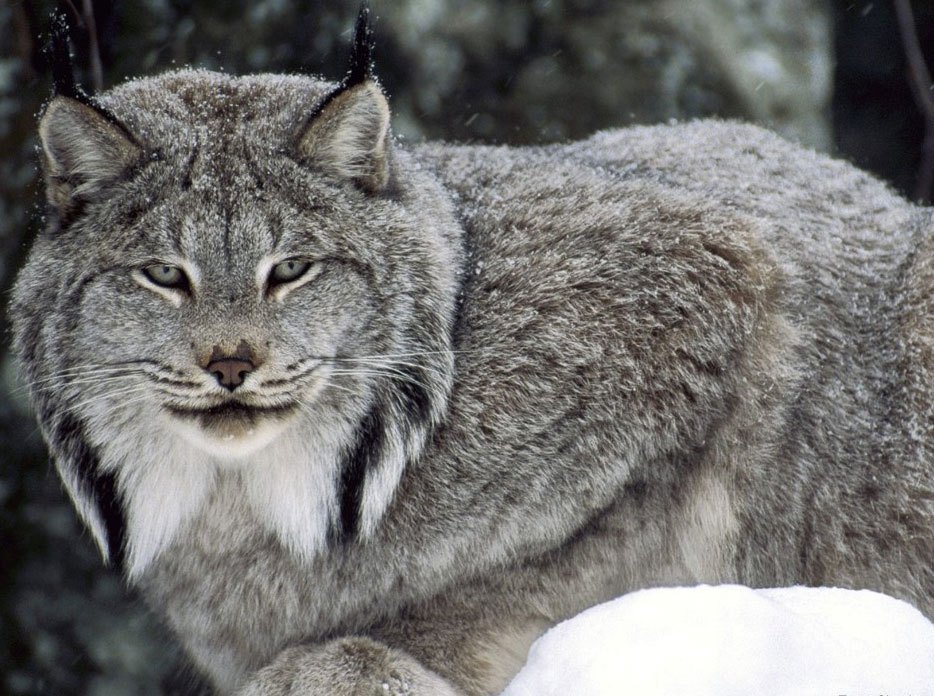
Canada lynx sitting – US Fish and Wildlife Service
The U.S. Fish and Wildlife Service is considering removing the Canada lynx from the threatened species list . . .
Wildlife officials in the United States declared Canada lynx recovered on Thursday [January 11] and said the snow-loving wild cats no longer need special protections following steps to preserve their habitat.
The Fish and Wildlife Service said it will begin drafting a rule to revoke the lynx’s threatened listing across the Lower 48 state under the Endangered Species Act. Wildlife advocates said they would challenge the move.
First imposed in 2000, the threatened designation has interrupted numerous logging and road building projects on federal lands, frustrating industry groups and Western lawmakers.
U.S. Rep. Greg Gainforte is taking heat from across the political spectrum for supporting “bikes over wilderness” legislation. This latest zinger is from G. George Ostrom . . .
Worrisome news recently broke with the new U.S. House Rep. Greg Gianforte, from Montana, suggesting the Wilderness Bill be amended to allow bicycles and other questionable uses. He implied the original bill allowed such things. As this paper’s editor, Chris Peterson, pointed out in his fine column last week, Gianforte has a very bad idea and, from this columnist’s point of view, Gianforte is inaccurate in his statement, not to mention the very real dangers bike riders would create for themselves and other legitimate users.
Please let me remind readers that I interrupted my growing journalistic career, sold my home and moved my family from Washington D.C. to help write the Wilderness Bill in the 87th Congress. I came home in debt from what we accomplished, but felt proud and honored to have been a part of it.
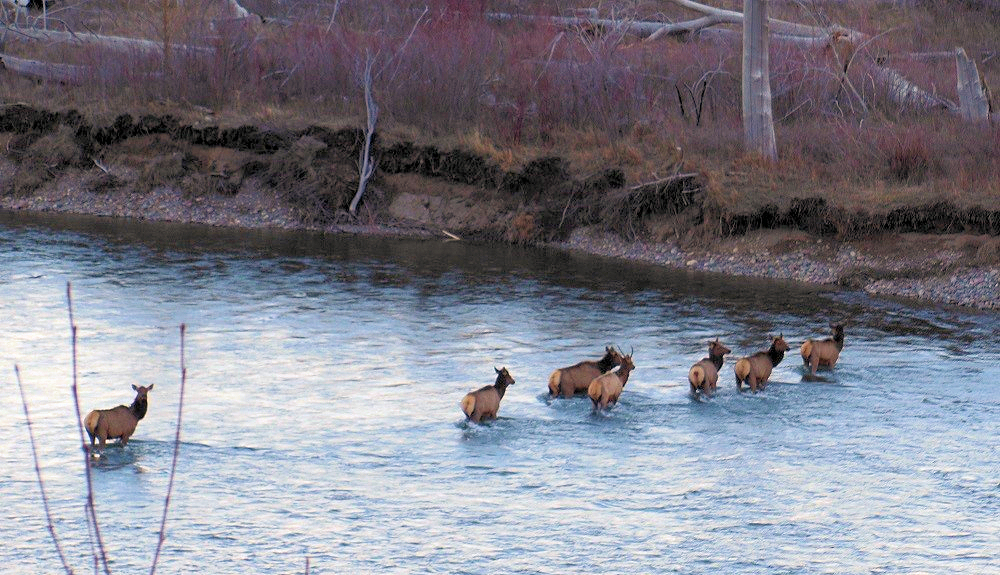
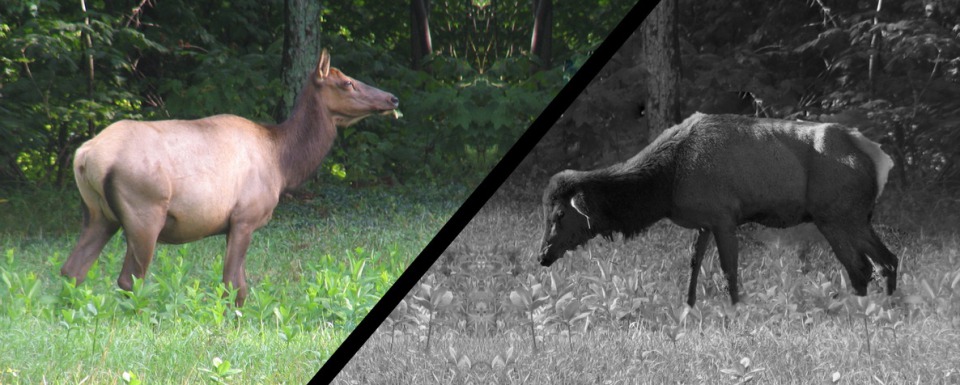
Chronic Wasting DIsease (CWD) – illustration of effects on elk
From the New York Times comes this article about what the states, especially Montana, are doing to combat deer family CWD . . .
As darkness closed in, one hunter after another stopped at this newly opened game check station, deer carcasses loaded in the beds of their pickups.
They had been given licenses for a special hunt, and others would follow. Jessica Goosmann, a wildlife technician with Montana’s Fish, Wildlife & Parks Department, stepped outside to greet them, reaching for the neck of each freshly killed deer to cut an incision and remove a lymph node for testing.
On the edge of this south-central Montana village, where deer hunting is a way of life, the game check station has become the front line of the state’s efforts to stop the spread of a deadly infection known as chronic wasting disease.
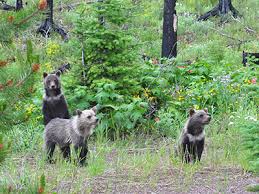
Grizzly bear cubs on old road bed – Montana Fish, Wildlife and Parks
Here’s an interesting roads vs. grizzlies study based on DNA data out of British Columbia . . .
It’s simple math, says scientist Clayton Lamb. The closer grizzly bears are to humans, the more ways there are for the bears to die. Put more simply, more roads equal fewer grizzly bears.
In a recent study examining a long-term DNA dataset of grizzly bear activity in British Columbia, Lamb and his colleagues conclusively determined what scientists have long suspected: higher road density leads to lower grizzly bear density, a critical problem for a species still rebounding from a long period of human persecution.
“The problem with grizzly bears and roads is a North American-wide issue. This is the first time that strongly links roads to decreased grizzly bear density,” said Lamb…
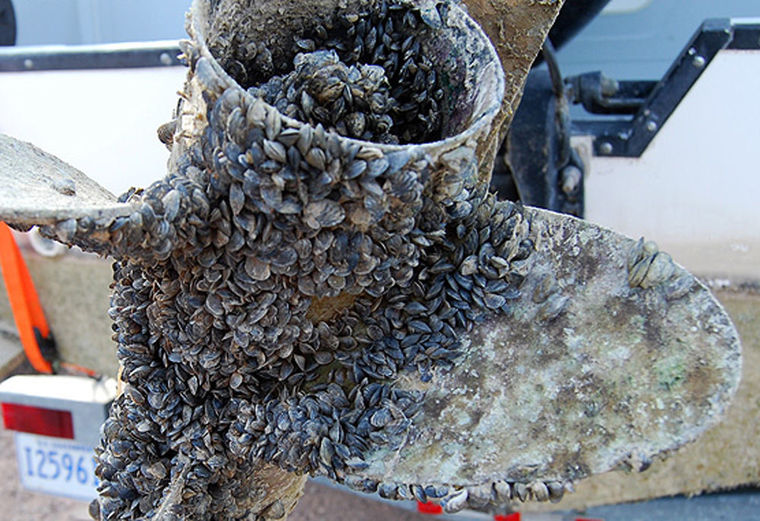
Invasive mussel DNA is still being found in Tiber Reservoir, but no larvae or adults so far . . .
Samples taken last year from Tiber Reservoir bolstered older evidence for the presence of invasive mussels.
In a press release Thursday, Montana Fish, Wildlife and Parks announced that samples of environmental DNA (eDNA) taken by it and the U.S. Geological Survey during 2017 indicated invasive mussels’ presence in Tiber Reservoir.
In Fall 2016, the discovery of quagga mussel larvae and a shell fragment there triggered a massive effort to detect and contain the animals. Over the course of 2017, the press release states, “FWP and partner agencies collected more than 1,500 plankton samples from 240 waterbodies,” including 128 plankton tow samples from Tiber and 147 at Canyon Ferry, where their presence is suspected.
Through these tests, “no adult mussels or larvae were found.”
A well-reasoned piece on the “bikes over wilderness” issue by Chris Peterson, editor of the Hungry Horse News . . .
On Tuesday, Aug. 28, 1928, Bob Marshall, a Forest Service employee and wilderness champion, started a walk at Echo Lake near Bigfork. By the end of the day, he arrived at the Elk Park Ranger Station up the South Fork of the Flathead. It was a 30 mile hike. He hiked 40 miles the next day to the Black Bear Ranger Station. The day after that, he did another hike, up and over Pagoda Pass, then off-trail through the woods to the top of the Chinese Wall and then back to Black Bear Ranger Station. That hike was 42 miles.
And so Bob walked.
Over the course of eight days, he went 288 miles, through what is now the Bob Marshall Wilderness and the Mission Mountain Wilderness. He ended up at the Seeley Lake post office.
Montana U.S. Sen. Steve Daines surprised Montanans by introducing the deceptively named Protect Public Use of Public Lands Act that would put nearly half a million acres of prime public lands in Montana at risk of development and exploitation.
Montana’s Wilderness Study Areas were identified 40 years ago as special, wild places, worthy of careful management. They vary greatly in habitat, ecosystems, and recreational offerings. A blanket policy applied across diverse areas is never good management. We therefore oppose Daines’ one-size-fits-all plan.
Many WSAs are overdue for action, and we’re not opposed to revisiting and finalizing management plans. But forcing a top-down and broad-brush approach to managing lands that haven’t been studied in decades is irresponsible.
Review should start with local, thoughtful and diverse discussions involving various stakeholders. Daines didn’t hold a single public meeting or ask for input from Montanans about these WSAs. His proposal not only ignores local input, which, apparently, is important to Daines only when it suits his needs; it also selects areas attractive to special interest development and resource extraction.
Many Montanans rely on WSAs. With his proposal Daines once again is ignoring those of us who value them to hunt, fish and reconnect with the landscape.
Here’s the Missoulian’s take on the final draft of the new Flathead Forest Plan . . .
With the clock ticking on a 60-day objection window, people who play in the Flathead National Forest have a lot of homework to study.
U.S. Forest Service analysts made many changes to backcountry areas in their draft forest plan released this month. The proposal recommends a new wilderness area between Whitefish and Polebridge. It might increase mechanized access around the Jewel Basin by Bigfork, and could affect hunter access in popular elk country.
“The draft plan adopts a large part of the Whitefish Range Partnership agreement, including 80,000 acres of recommended wilderness that was never recommended before,” said Amy Robinson of Montana Wilderness Association. “And it looks like there’s more recommendation for high-intensity recreation area in the southern range than was in the last draft.”
Grizzly Bear – U.S. Fish and Wildlife Service-Terry Tollefsbol, NPS
Although there’s no effort in place to restore grizzly bears to the Bitterroots, they should repopulate the area on their own, given enough time . . .
While the potential for grizzly bears in the Bitterroot Mountains was a topic of discussion during last week’s annual meeting of the Interagency Grizzly Bear Committee, area wildlife managers say they don’t think any have established residence here — yet.
The Bitterroot National Forest and the Bitterroot-Selway Wilderness area are prime grizzly bear habitat, notes Dave Lockman, a wildlife biologist with the forest. As their population continues to increase elsewhere, they’re expanding their ranges.
Lockman noted that a grizzly bear sighting was confirmed in 2016 in the upper Big Hole River area, and that one was identified on private property on Sunset Bench southeast of Stevensville in 2002. That bear is thought have crossed the Sapphire Range from the Rock Creek drainage. In addition, a black bear hunter killed a mature male grizzly in 2007 in the North Fork of Kelly Creek on the Nez Perce-Clearwater National Forest, about 60 miles north of what’s considered the Bitterroot ecosystem. That bear was genetically associated with the grizzly populations in the Selkirk Mountains in northern Idaho.
Here’s a good overview of the issues surrounding H.R. 1349, the recently introduced “Wheels Over Wilderness” bill. The NFPA even gets a mention . . .
Advocates of designated wilderness with a capital “W” worry that a new congressional proposal could allow another w-word access to federally protected lands — wheels.
Specifically, mountain bikes, which are currently prohibited in congressionally designated wilderness areas, but also other wheeled devices. As the measure to allow them moves forward, however, it has pitted some user groups against one another while drawing wide opposition from environmental organizations.
A bill introduced to Congress last week by California Republican Rep. Tom McClintock would amend the 1964 Wilderness Act to allow the use of certain wheeled devices, including mountain bikes, in Wilderness areas — a use that has historically been prohibited on the nation’s 110 million acres of federally protected land.