Articles remembering and praising Chuck Jonkel continue to roll in, including the below column by Larry Wilson and nice pieces by Rob Breeding and Chris Peterson . . .
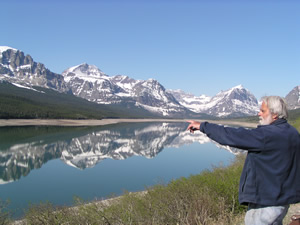
Dr. Charles ‘Chuck’ Jonkel passed over The Great Divide this week. He never owned property on the North Fork, but spent so many years here researching bears that I feel he was an actual North Forker.
My first memories of Chuck came in the late 1950s or early 1960s when he was on the North Fork doing research on black bears. Mel Ruder did an extensive article in the HHN with pictures of Chuck going into the den of a hibernating black bear to work on the sleeping bear.
Here’s a strong editorial by Todd Wilkinson, Environmental Columnist for Explore Big Sky, making the case for disallowing trophy hunting of grizzly bears, even after they are delisted . . .
Nowhere in the legal framework of the federal Endangered Species Act does it mandate that animals removed from federal protection be subjected to trophy sport hunting.
America spent millions of dollars reversing the downward spiral of bald eagles. Indeed, someone today could argue that the majestic white-crowned raptors would be fun to shoot and look stunningly beautiful as dead stuffed prizes of avian taxidermy.
Yet when the great birds were finally declared biologically recovered in 2007, society didn’t celebrate by turning around and initiating sport seasons on eagles, selling licenses to generate revenue for the coffers of state wildlife agencies. Why not?
As expected, Solonex has challenged the cancellation of their oil and gas leases in the Badger-Two Medicine. The paperwork was filed last Friday . . .
A Louisiana company challenged the cancellation of an oil and gas lease in northwest Montana on Friday, after federal officials said drilling would disturb an area sacred to the Blackfoot tribes of the U.S. and Canada.
The 6,200-acre lease owned by Solenex LLC of Baton Rouge is in the Badger-Two Medicine area of the Lewis and Clark National Forest. It’s just outside Glacier National Park and the Blackfeet Indian Reservation.
Attorneys for the company want U.S. District Judge Richard Leon in Washington, D.C., to reject the Interior Department’s March 17 cancellation of the lease.
This is truly the end of an era. Chuck Jonkel passed away Tuesday at age 85.
Rob Chaney of the Missoulian wrote a first-rate obituary. Recommended reading . . .
Grizzly bears emerging from their winter dens will encounter a changed landscape: Longtime grizzly advocate Chuck Jonkel has died.
“Mr. Jonkel was truly a pioneer in grizzly bear science,” said Leanne Marten, Regional Forester for the Forest Service’s Northern Region. “Montana will miss him greatly. Everything we know about grizzly bears is due to Mr. Jonkel’s expertise.”
Jonkel died Tuesday evening at his home in Missoula. He was 85.
“Tim Ryan from the Flathead Reservation came down on Monday and did a Salish smoke ceremony for Dad, and then (Blackfeet singer) Jack Gladstone and Patty Bartlett sang him off on Tuesday morning,” son Jamie Jonkel said. “We took him down by the river for the ceremony, and he really liked that.”
From a Montana Fish, Wildlife and Parks press release . . .
A 3 year old male grizzly bear was captured April 10th at a private residence along Tamarack Road northwest of Columbia Falls. The 211 pound bear was captured by FWP Bear and Lion Specialist Erik Wenum after the resident reported a bear had killed some of his young chickens.
The young bear was anesthetized, radio-collared, and released by Grizzly Bear Management Specialist Tim Manley. The Interagency decision was made to release the bear back into the wild since it had no previous known conflicts. The grizzly bear was released on the afternoon of April 11th in the Whale Creek drainage of the North Fork of the Flathead, 34 straight line miles from where it was caught.
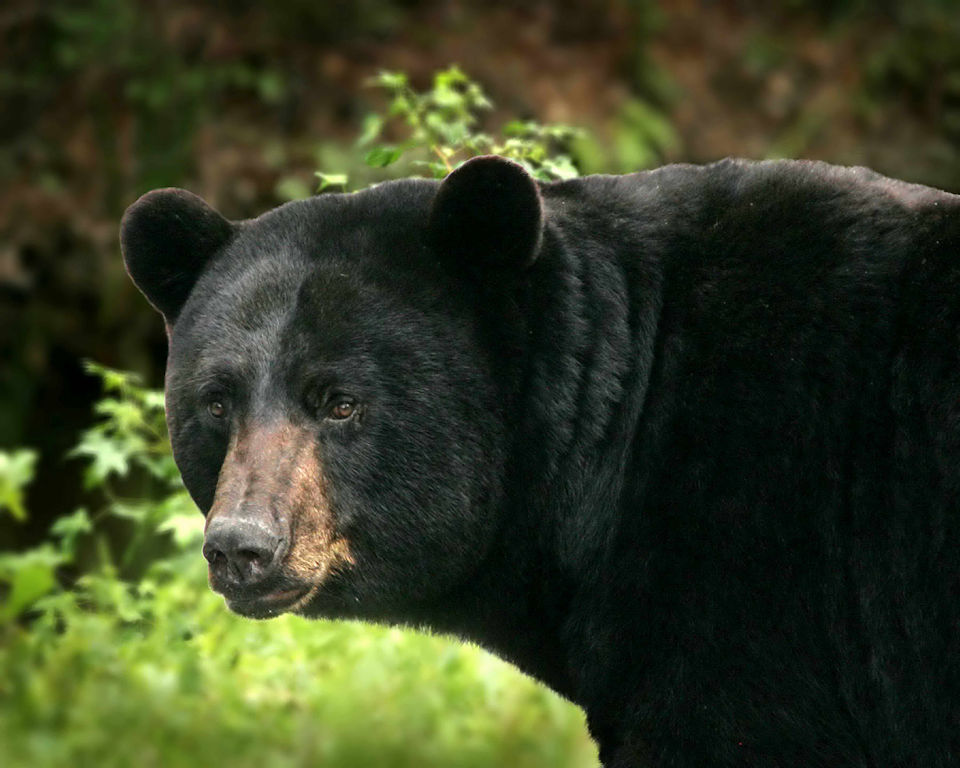
Black bear activity has picked up as well. FWP Bear and Lion Specialist Erik Wenum reports that he has handled two problem bears in the last two days and is attempting to trap four other black bears that have ranged close to residences. Wenum reminds
residents to take down bird feeders, secure garbage, feed pets inside, clean up chicken and livestock feed, and in general remove all odorous substances that can draw bears.
On Monday morning, a radio tracking flight was conducted to locate radio-collared grizzly bears in the Swan and Mission mountains. A total of 8 radio-collared grizzly bears were located. Seven of the bears were out of their dens, but still in the upper elevations in the snow. A total of 16 grizzly bears were observed which included cubs, yearlings, and two-year-olds that were with their mothers.
Additional flights are planned during the month of April to locate radio-collared grizzly bears in the Whitefish Range and the Middle Fork of the Flathead. One of the main objectives of the flights is to get visuals on adult females and the number of young they have when they first emerge from their dens. This allows biologists to track cub reproduction and cub survival throughout the year.
Here’s a good article from the Flathead Beacon about the local bears emerging from hibernation. It also discusses the usual spring headache of people not securing bear attractants . . .
With the arrival of spring, bears are emerging from their mountain dens and descending into the lower valleys in search of food, and one young bruin has already pried its way into a Whitefish home to snack on leftover Easter candy.
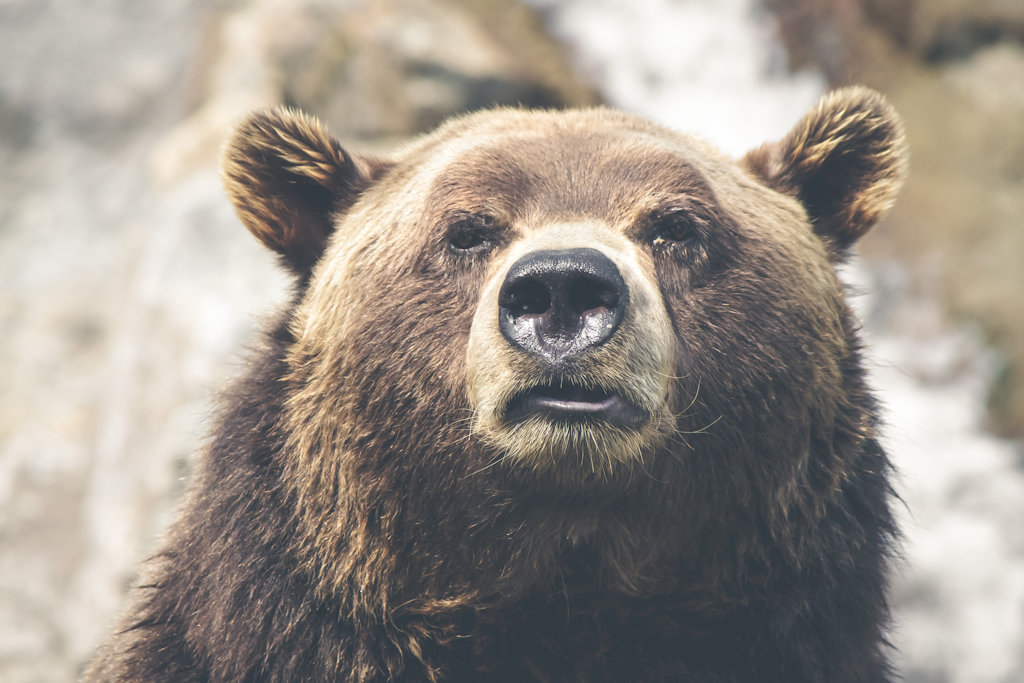
As local black bears and grizzlies begin to stir in the Flathead Valley, wildlife managers are receiving an uptick in reports of bear sightings and conflicts, prompting wardens to issue a stern reminder to residents who forget to lock up pet food, bird seed, trash, and other food attractants.
“It is entirely avoidable if we start at the beginning of the season and make a conscious effort to secure these food attractants,” Erik Wenum, bear and lion specialist with the Montana Fish, Wildlife and Parks, said. “Bears don’t just go from wandering around in the woods doing bear things to going into homes. It’s a taught learning curve.”
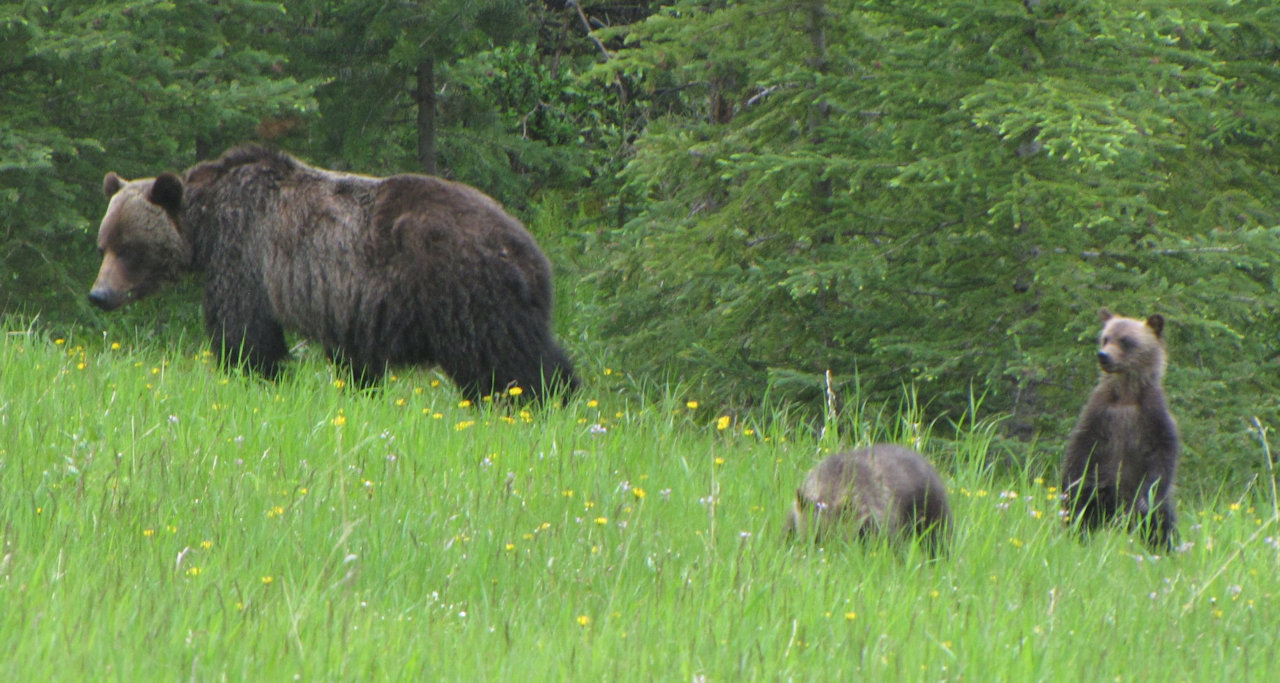
Grizzly Sow with Two Cubs – – Wikipedia en:User Traveler100
There were fewer grizzly bear deaths last year in the Northern Continental Divide Ecosystem . . .
On the heels of the federal government’s proposal to delist the grizzly bear population in the Yellowstone National Park area, this year’s annual report on Glacier National Park and the surrounding region shows the population continuing to hit its recovery targets.
Grizzlies in the lower 48 states were listed as “threatened” under the federal Endangered Species Act in 1975, after their historic range and population plummeted over decades of over-harvesting and habitat loss.
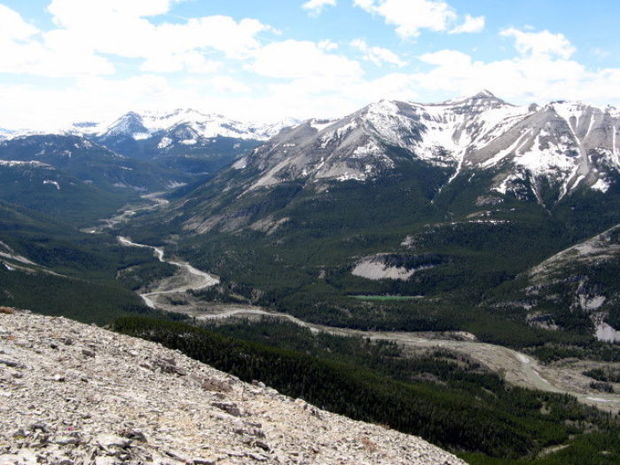
The Northern Continental Divide Ecosystem boasts the highest number of great bears among the five geographically distinct populations in the Northwest. It covers more than 5.7 million acres in Northwest Montana and includes Glacier National Park, the Bob Marshall Wilderness Complex and surrounding lands.
Documented mortalities in the Northern Continental population, now estimated at 982 individuals, dropped substantially in 2015 from the two preceding years. That’s something of a return to normal, according to Cecily Costello, a research wildlife biologist for Montana Fish, Wildlife and Parks who was one of the lead authors on the annual report.
Here’s an excellent article by Dillon Tabish of the Flathead Beacon on the concerns surrounding the proposed water bottling plant near Creston . . .
The Flathead Valley Deep Aquifer is a waterlogged mass of sand and gravel stretching thousands of feet beneath the entire local landscape. Primarily fed by snowmelt from the surrounding mountain ranges and precipitation, the massive aquifer is the main source of water in the valley as it flows south toward Flathead Lake, providing a vital resource to a growing collective of urban and rural communities and playing a critical role in the region’s environmental and ecological balance.
For as far-reaching and abundant as the local aquifer exists, worries are running just as deep in the agricultural community of Creston and beyond following a proposed water bottling plant on a slough along the Flathead River.
Lew Weaver, the owner of Montana Artesian Water Co., is seeking a water rights permit from the state to pump 710 acre-feet of water annually from the underground aquifer, the equivalent of 1.2 billion 20-ounce water bottles.
Here’s some useful information about Yellowstone grizzly bear delisting from an announcement passed along by John Frederick. Note the link at the end to a federal site for submitting written comments . . .
Last month the U.S. Fish & Wildlife Service issued a proposed rule that would remove Endangered Species Act protections for grizzly bears in the Yellowstone region. Next week, the USFWS will be hosting a public meeting to explain the delisting rule and “Conservation Strategy” (how bears will be managed post-delisting). They will accept written and oral public comments at the meeting:
Tuesday, April 12, 5:00-8:00pm—Bozeman, MT—Holiday Inn, 5 E. Baxter Ln. There will also be an informational open house from 2-4pm before the public comment begins. (This meeting, and one the night before in Cody, WY are the only currently scheduled USFWS public meetings on Yellowstone grizzly bear delisting.)
While the recovery of this grizzly bear population has been an amazing Endangered Species Act success story, we need to make sure it continues if grizzly bears are delisted! Your comments and support for grizzly bear conservation is crucial to this effort.
NFPA member Frank Vitale’s op-ed in the Flathead Beacon has some pointed comments about mountain bikes in wilderness areas . . .
Mountain bikes should never be permitted in wilderness. Consider this potential scenario: A packstring is slowly making its way down through Gateway Gorge, coming off the bench from Sabido Cabin deep in the heart of the Bob Marshall Wilderness. The trail is steep, rocky and narrow and it’s a long way down to the creek bottom.
The wreck took place about half way through the gorge. Half the packstring went off the edge. Two mules went down in the bottom, floundering and flopping around with broken legs; packs and gear strewn all over; pack boxes smashed to bits. The packer luckily stayed on his mount and tried to keep the rest of the string together. It started almost instantly, with no time for the packer to even know what was happening as two mountain bikers came down from the top, hell-bent for leather, and came up from behind the packstring.
Could this really happen? You bet. This could have been a U.S. Forest Service packer, an outfitter, or a group of family and friends out on a week-long pack trip in the wilderness. Somebody could have been killed. Continue reading Frank Vitale: Bikes don’t belong in wilderness areas→