Category Archives: News

Meeting about road draws North Fork crowd

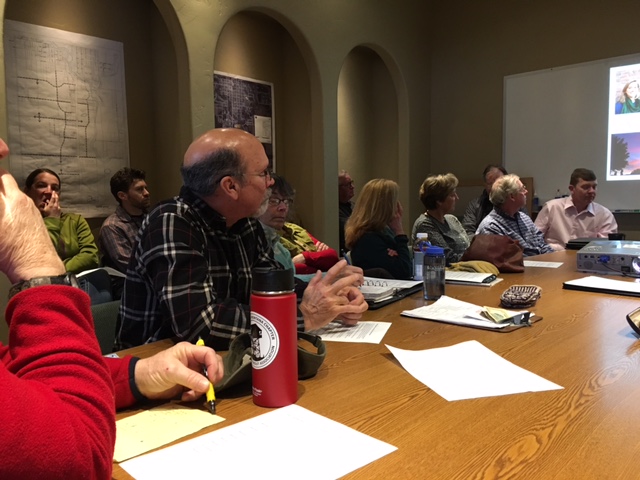
Debo Powers sent in this report on the traffic management meeting at the Columbia Falls city hall last week . . .

On January 28, many North Fork winter residents braved a foggy morning and icy roads to drive to Columbia Falls to attend a 9:00 am meeting at the Columbia Falls City Hall where officials would be discussing paving the North Fork Road to Camas Creek. North Forkers on both sides of the issue attended the meeting, but no one from the audience was allowed to speak.

Participating in the discussion was Montana State Senator Dee Brown, Columbia Falls City Manager Susan Nicosia, Flathead County Commissioner Phil Mitchell, Columbia Falls Mayor Don Barnhardt, Public Works Director Dave Prunty, and Flathead County Road and Bridge Superintendent Ovila Byrd.

The officials discussed traffic congestion that will occur in 2017 when the new bridge over the South Fork is constructed on Highway 2 near Hungry Horse. Although a temporary bridge will carry traffic, the construction will most likely cause delays in travel. The two detours that were discussed were the North Fork Road to Blankenship Road or the North Fork Road to Camas Creek Road.

Since a proposal to pave the North Fork Road to Camas Creek would have to clear many legal and procedural hurdles, as well as major opposition from many landowners and conservation groups, paving the road by 2017 to provide a detour for construction on Highway 2 is not a viable option. However, the meeting showed that the paving issue is still alive and well in many people’s minds. The North Fork Preservation Association, founded in 1982 to oppose paving the North Fork Road, has vowed to fight any proposal to pave any section of the road.

Information about the road and other North Fork issues will be presented at the Winter Interlocal Meeting on February 17.

Conservation groups join to fight Kootenai snowmobile lawsuit

As we mentioned a week back, several area conservation organizations joined together to intervene in the lawsuit challenging the inclusion of recommended wilderness areas in the Kootenai and Idaho Panhandle National Forests . . .

A coalition of conservationists has asked to intervene in a lawsuit filed by snowmobilers challenging wilderness provisions in the Kootenai and Idaho Panhandle national forest plans.

The Ten Lakes Snowmobile Club, Citizens for Balanced Use and five other interest groups sued the U.S. Forest Service in November, accusing the agency of improperly excluding snowmobile use from the forest’s recommended wilderness areas and improperly recommending new waterways for the national Wild and Scenic River Act designation.

On Jan. 25, The Wilderness Society, Headwaters Montana, Idaho Conservation League, Montana Wilderness Association, Panhandle Nordic Ski and Snowshoe Club and Winter Wildlands Alliance formally asked to intervene in the case.

Read more . . .

Bob Marshall Wilderness Foundation and Montana Wilderness Association partner to present the 4th annual ‘Wilderness Speaker Series’

From the press release . . .

Now in it’s 4th year, the Wilderness Speaker Series at Flathead Valley Community College invites Montanans of all ages to learn more about the history and ecology of the public lands here in the Treasure State. The Bob Marshall Wilderness Foundation and the Montana Wilderness Association will host these FREE public events on the first Thursdays of February, March and April from 7:00pm 8: 30pm at FVCC. All three events will take place in the Arts and Technology Building.

This year, the Wilderness Speaker Series features three diverse and renowned speakers from across the region:

February 4: Wilderness Fire Management and Specific Challenges in the Flathead National Forest by Seth Carbonari (Room 139)
Wilderness managers strive to allow the ecological role of natural fire in Wilderness areas. The 2015 fires on the Flathead National Forest provide examples of some of the challenges faced in fire management; including protecting wilderness values, public safety and access.

March 3: From Flathead to Yellowstone to Yukon : Nature Needs Half, a Hopeful Agenda for the Future of Wild Nature and Humanity by Harvey Locke (Room 144 A/B)
Renowned conservationist Harvey Lock explores the “no holds barred”, Bob Marshall style declaration of love for the wild world and the landscape-scale management tactics it will take to save the precious ecosystems we have left.

April 7: This is the Crown of the Continent, Our Home by Rick Graetz (Theatre)
Photographer and naturalist Rick Graetz takes the audience on a stunning tour of the wild places in our own backyard through the eye of his camera lens and through the eye of history.

Grab a friend and join MWA and the BMWF to learn more about the beautiful mountains and region that we call home. For more information, please contact Amy Robinson at 284-1747 or arobinson@wildmontana.org. Wilderness Speaker Series events are listed on the FVCC Continuing Education Calendar.

Flathead Forest proposes salvage logging in Trail Creek burn

The Forest Service wants to salvage some of the standing timber from last year’s Trail Creek Fire. There’s no word on any objections to the sale, yet . . .

The Flathead National Forest is proposing a salvage timber sale within the more than 20,000 acres that burned in the Trail Creek Fire last summer.

The forest is accepting public comments on its plan to log 1,351 acres — about 6 percent of the total fire area — about two miles northeast of the Spotted Bear Ranger Station.

Forest officials estimate it would generate 6 million to 7 million board-feet of timber. The harvest, limited to burned areas outside the Bob Marshall Wilderness, would target only dead trees and those burned badly enough that they would likely die within three years.

Read more . . .

Conservationists seek to defend recommended wilderness against snowmobiler lawsuit

NEWS RELEASE: January 25, 2016

CONTACT: Tim Preso, Earthjustice, (406) 586-9699, tpreso@earthjustice.org

Missoula, MT – A coalition of conservationists, represented by Earthjustice, today requested to intervene in a lawsuit filed by snowmobilers that seeks to overturn restrictions on motorized use in recommended wilderness areas on the Kootenai and Idaho Panhandle National Forests.

At issue are the Forest Service’s 2015 revised forest management plans for the two forests, which recommended certain rugged and pristine areas for wilderness designation and prohibited motorized use within their boundaries to protect wilderness character and preserve the opportunity for permanent protection under the federal Wilderness Act. Snowmobile interest groups filed a lawsuit in November 2015 that asks a federal judge to overturn these recommended wilderness designations and open the protected areas to motorized use by snowmobiles and four-wheelers.

“Snowmobilers already have access to 86 percent of the Kootenai forest and 70 percent of the Idaho Panhandle forest,” said Earthjustice attorney Tim Preso, who is representing the conservationists. “We are standing up to defend the peace and solitude of the last pockets of wilderness-quality lands in these otherwise heavily logged and motorized forests.”

The recommended wilderness areas at issue include landscapes prized for their outstanding backcountry recreation opportunities, including Scotchman Peaks and Roderick Mountain in Montana and the Mallard Larkins and Selkirk Range in Idaho. These areas are home to mountain goats, grizzly bears, Canada lynx, wolverines, and a wide variety of other species, including the last remnant population of woodland caribou in the continental United States. In total, they constitute just 4 percent of the 2.2-million-acre Kootenai National Forest and 7 percent of the 2.5-million-acre Idaho Panhandle National Forests.

Earthjustice is representing The Wilderness Society, Headwaters Montana, Idaho Conservation League, Montana Wilderness Association, Panhandle Nordic Ski and Snowshoe Club and Winter Wildlands Alliance. The groups seek to defend the Forest Service’s designation of recommended wilderness areas and wild and scenic river eligible areas and its decision to restrict motorized access in these areas.

Earthjustice, the nation’s premier nonprofit environmental law organization, wields the power of law and the strength of partnership to protect people’s health, to preserve magnificent places and wildlife, to advance clean energy, and to combat climate change. Because the earth needs a good lawyer.

Judge asked to halt cancellation of Badger-Two Medicine drilling lease

Two Medicine Lake

After a brief pause for closed-door negotiations that just happened to fall over the holiday season, the lawsuit over drilling in the Badger-Two Medicine is back in action . . .

A Louisiana company has asked a federal judge to block government plans to cancel a long-stalled federal energy lease on land considered sacred to American Indians.

The Interior Department announced in November that it plans to cancel the 6,200-acre lease near Glacier National Park because it was improperly issued in 1982. It’s owned by Solenex LLC of Baton Rouge, Louisiana.

In a Tuesday court filing, company attorney Steven Lechner said the government arbitrarily reversed course last year after previous determinations that the leases were valid.

Read more . . .

Ten Lakes debate could impact future wilderness proposals

Big Therriault Lake - Kootenai National Forest

Over at the Missoulian, Rob Chaney has put together an excellent article, including maps and supporting documentation, on the issues and conflicting interests surrounding the Ten Lakes Wilderness Study Area.

Recommended reading . . .

If it’s true that you’re doing something right when everyone’s angry with you, the Kootenai National Forest has nailed its wilderness designation process.

More likely, it may become the decision point for how the U.S. Forest Service respects the recreation wishes of snowmobilers, cross-country skiers and land managers across the Northwest. The lens for that debate is the Ten Lakes Wilderness Study Area.

“There was a huge effort in the forest planning process, where the Montana Wilderness Association, The Wilderness Society and others wanted to sit down with folks in Eureka to find common ground around Ten Lakes,” Kootenai Forest Supervisor Chris Savage recalled. “They met for a couple of years to come to some resolution. But it became apparent from other parties that they just don’t see it should be a wilderness study area, and that it shouldn’t be managed as wilderness at all. They had to stop the process.

Read more . . .

Closed-door discussions fail in lawsuit over Badger-Two Medicine leases

Badger-Two Medicine Region

After several weeks of closed-door discussions aimed at resolving a lawsuit over drilling leases in the Badger-Two medicine region, the Interior Department and Solonex, the Louisiana energy company that brought the lawsuit, notified the court yesterday afternoon that they intend to resume litigation.

This means the government will press ahead with their decision to cancel all energy leases in the Badger-Two Medicine and Solonex will fight the decision.

Expect some sort of fireworks within the next couple of weeks.

Glacier Park spokeswoman Denise Germann headed for Grand Teton

Denise Germann, the source for many Glacier Park and Flathead Forest stories referenced here over the years, is headed for Grand Teton National Park . . .

The latest news from Glacier National Park spokeswoman Denise Germann is that Denise Germann is leaving her job with Glacier National Park.

Germann confirmed Thursday that she has accepted the position of public affairs officer for Grand Teton National Park in Wyoming.

Germann filled in as Teton’s spokeswoman for three months this fall, and said she went without any intention of pursuing the position permanently.

Read more . . .

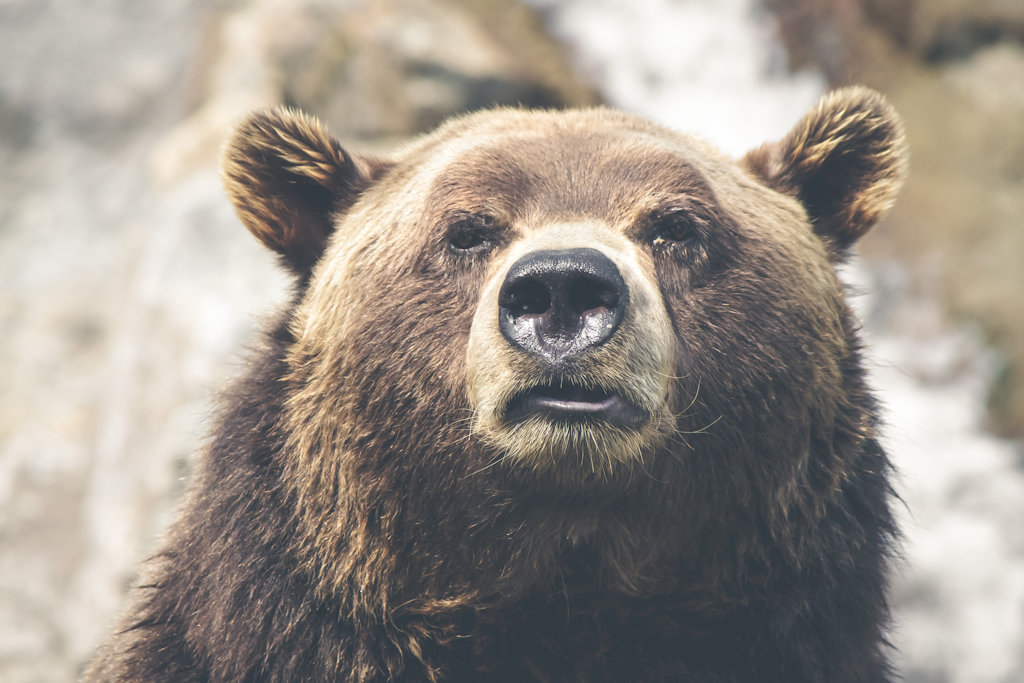
‘Detection dogs’ used to study habitat suitability for bears

Camas the detection dog

Sometimes science is a bit… quirky. This is also a pretty interesting read . . .

A recently released study from WCS (Wildlife Conservation Society) details a new method using “detection dogs,” genetic analysis, and scientific models to assess habitat suitability for bears in an area linking the Greater Yellowstone Ecosystem (GYE) to the northern U.S. Rockies.

The method, according to the authors, offers an effective, non-invasive approach to the collection of data that could play a vital role in the further recovery of grizzly bears during the coming decades.

“The use of detection dogs allowed us to quantify and map key areas of habitat for black bears in the Centennial Mountains located along the Idaho-Montana border west of Yellowstone National Park,” said Jon Beckmann, WCS Scientist and lead author of the study. “Black bears are a proxy species useful for predicting likely grizzly bear habitat. With recovery, a larger grizzly bear population needs room to roam and to reconnect with other populations. The Centennial Mountains region of the U.S. northern Rockies can provide room and safe linkages— critical to connecting the bear population in the GYE area to others further north and west”.

Read more . . .