Category Archives: News

New Montana law to fund sage grouse preservation

Montana now has a pot of money for sage grouse conservation . . .

Gov. Steve Bullock has signed into law a plan to pay for and enact Montana’s strategy to preserve a struggling bird species.

Bullock signed Senate Bill 261, the Sage Grouse Stewardship Act, during a small ceremony in his office Thursday.

The measure will provide millions of dollars for the state to conserve habitat for the chicken-sized birds. Part of the money will be used by the Department of Natural Resources and Conservation to hire at least five new employees to manage the program.

Read more . . .

Report from the Interagency Grizzly Bear Committee meeting

Cinco - 5 May 2015
Cinco – 5 May 2015

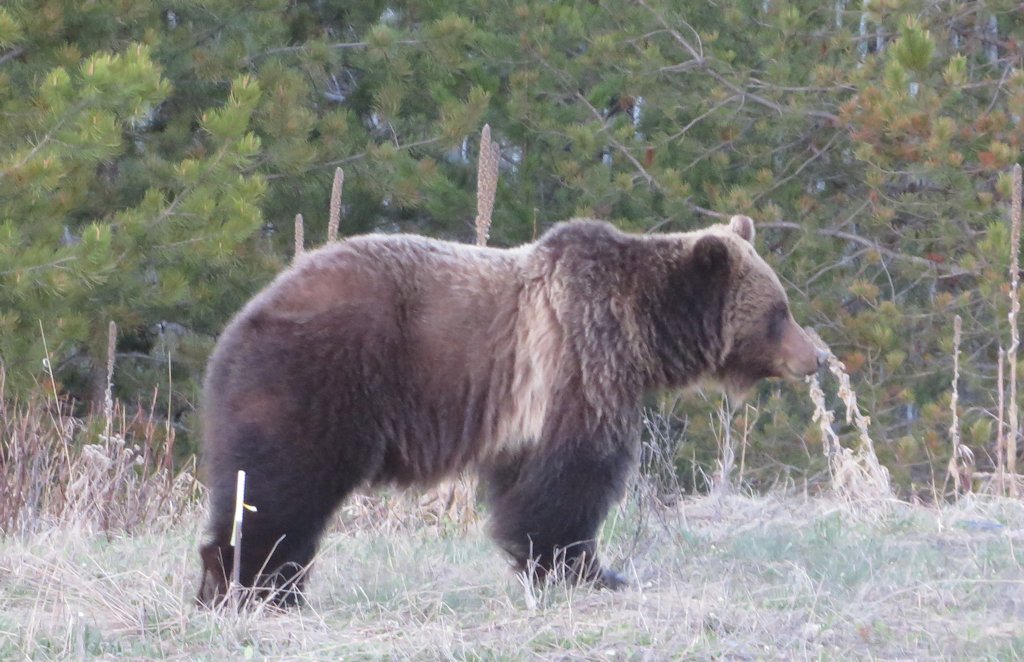
Debo Powers, NFPA Vice President, attended the spring Northern Continental Divide Ecosystem grizzly bear management meeting yesterday. Here is her report:

I remember the old days when Chuck Jonkel held an annual Grizzly Bear Research meeting in Sondreson Hall to share grizzly bear research with North Fork landowners. We would sit on the uncomfortable wooden benches in the sweltering temperatures of a hot summer day and listen to the enthusiastic reports from young bear researchers. Those were the meetings that fanned the flames of my love for grizzly bears.

It has been many years since those meetings happened, but the memories associated with them prompted me to attend Wednesday’s meeting of the Interagency Grizzly Bear Committee (IGBC), which was held in the conference room of the Hungry Horse Ranger Station. Rather than the animated stories of youthful researchers filled with an infectious passion for learning about grizzlies in order to save them from extinction, today’s meeting featured reports from people from various agencies and tribes who have successfully brought about grizzly bear recovery in the Crown of the Continent. It’s amazing to see how things can change in a few decades when humans work together to save a fellow species.

The packed meeting was facilitated with humor and style by Deb Mucklow, the Spotted Bear District Ranger. Numerous agencies and tribes participated in the meeting. Members of the public , representatives from various environmental groups, and reporters from Flathead Beacon, Hungry Horse News, and NF News were present in the audience.

The reports were fascinating and focused on the conservation strategies that have been used by different groups in the Northern Continental Divide Ecosystem (NCDE). Some of the topics covered were: the effectiveness of food storage orders to decrease grizzly habituation, educational resources to train humans to operate awarely in grizzly country, the use of snow rangers and fly-overs to monitor snowmobiling in grizzly habitat (especially when bears are emerging from dens), and reports from management officials, like Tim Manley, on bear conflicts this spring.

Rick Mace, who will be retiring soon, received a beautiful plaque with a huge grizzly paw for his three decades of leadership in grizzly bear conservation and management. Afterwards, he presented the results of his trend monitoring research on grizzly bear populations in the 23 management units of the NCDE. It was nice to notice that we live in one of most densely populated grizzly habitats in the Northern Continental Divide Ecosystem. Rick’s final written report will be available in a few months.

It was a day of information and sharing . . . a day well spent, despite the beautiful weather that beckoned us to be outdoors in grizzly country.

Glacier Park wants comments on Going-to-the-Sun Road Corridor Management Plan

As mentioned in an earlier post here, Glacier Park has developed five “preliminary alternatives” for handling increased traffic and usage along Going-to-the-Sun Road. None of the choices are entirely palatable, although it’s pretty obvious they prefer alternative #5. In any event, they are asking for public comment with a June 5 deadline.

Here’s the official press release . . .

Glacier National Park is encouraging public comment regarding five preliminary alternatives that have been developed for the Going-to-the-Sun Road Corridor Management Plan. These preliminary alternatives are conceptual at this time, and public comment will help in further development, modification and analysis of alternatives for the draft plan and environmental impact statement.

For many years, especially during July and August, the Going-to-the-Sun Road Corridor has experienced crowding and congestion along the road and at associated pullouts and parking areas. Many of the more popular trails in the road corridor are also congested, and impacts to vegetation and wildlife are increasing. Park visitation is on the rise and trends indicate it will continue to increase in the future. Increasing visitation will add to congestion and crowding, impacts to natural resources, and stress to facility infrastructure such as parking areas and restrooms. Additionally, a recent financial analysis has indicated that the portion of the entrance fees that support the shuttle system launched in 2007 are only paying for operations and maintenance and do not support acquisition of buses.

The preliminary alternatives outline various responses that park management could take to address issues along the Going-to-the-Sun Road. Alternative 1 is the no-action alternative. Alternatives 2, 3 and 4 were developed using a more traditional approach of forecasting or predicting a certain future condition of high visitation and longer visitor season. They describe alternative ways the park would respond. Alternative 5 describes a flexible management approach to allow the park to respond to an uncertain future, and changes in transportation, visitation, economics, funding and climate.

The preliminary alternatives were informed by comments and concerns received from the public during the summer of 2013, research conducted by the University of Montana and socioeconomic and transportation contractors.

The alternatives are not fully developed yet and are being shared at this time to get early public comment and response. The park has not selected a preferred alternative, nor completed the environmental analysis. The draft plan and environmental impact statement will identify a preferred alternative and analyze impacts of all alternatives, and is anticipated to be available for review and comment later this fall. Public meetings will be held at that time.

The preliminary alternatives are described in the project’s spring newsletter available at https://parkplanning.nps.gov/glac. Comments may be submitted online at this website or by mail to: Glacier National Park, Attn: GTSR Corridor Plan, P.O. Box 128, West Glacier, MT, 59936. Comments are due by June 5, 2015.

For more information contact the park at 406-888-7800.
Solonex wants accelerated consideration of plans for oil drilling in Badger-Two Medicine

Another volley in the fight over oil drilling in the Badger-Two Medicine region . . .

A Louisiana company is asking a judge to resolve its lawsuit challenging the government’s suspension of an oil and gas lease near Montana’s Glacier National Park so the company can begin drilling this summer.

The 6,200-acre lease is on land sacred to the Blackfoot tribes of the U.S. and Canada. It was suspended by the U.S. Interior Department in the 1990s along with dozens of other leases in the area.

Over the years, most of the leases were retired or surrendered, and now only 18 remain, covering more than 40,000 acres in the Badger-Two Medicine area south of Glacier.

Read more . . .

See also: Solenex requests accelerated hearing in Badger-Two Medicine drilling case

Congress looking at Land and Water Conservation Fund extension

The Land and Water Conservation Fund has to be reauthorized by September. Almost everyone seems to think it’s a swell idea, but the devil is in the details . . .

An important conservation program could expire in September unless Congress passes legislation to save it.

The Land and Water Conservation Fund was the subject of a U.S. Senate Committee on Energy and Natural Resources hearing last month. The hearing, which included Montana Sen. Steve Daines, comes as both the House and Senate consider passing legislation to permanently extend the fund.

The LWCF was created in 1965 and uses profits from offshore oil and gas developments to fund conservation and land acquisitions across the country. The primary goal of the fund is to protect land and ensure that it is accessible for recreation. It also offers funds to state and local governments to buy and protect land.

Read more . . .

Glacier Park proposes solutions for Sun Road congestion

Glacier Park is trying to figure out what to do about overcrowding on Going-to-the-Sun Road. At this point, they’ve proposed five alternatives, none of which are entirely palatable. If you want a hand in this process, download the current management plan newsletter, read about the alternatives and submit comments. The deadline for comments is June 5.

Here’s a write-up from the Flathead Beacon . . .

The Going-to-the-Sun Road is a global icon, attracting millions of visitors to Glacier National Park each year and consistently garnering praise for its awe-inspiring views and connection to pristine recreation opportunities.

But with the growing popularity comes a significant dilemma. Once word spreads that the Sun Road is fully open in summer, visitors flood the park, clogging the narrow two-lane corridor with vehicles and filling the surrounding trails with hikers.

Amid this increased visitation and congestion along the main thoroughfare, park officials are proposing several changes that could impact how visitors travel throughout Glacier.

Read more . . .

Genetic research gives insight into Greater Yellowstone foxes

Here’s some interesting research about foxes which, I was surprised to learn, are relatively recent arrivals on this continent . . .

Blame the snow and cold.

Thanks to nasty winters, the Greater Yellowstone Ecosystem, including the Beartooth Mountains, have become a genetic island for Rocky Mountain red foxes.

That’s one of the findings from research that Patrick Cross conducted over two years while spending finger-numbing winter days in the Beartooth Mountains trapping the native high-elevation foxes. Cross, a University of Montana graduate student in systems ecology, was working with the Yellowstone Ecological Research Center. For his research, Cross had hypothesized that the foxes may be genetically different from those found in nearby Yellowstone National Park. Instead, he found that the two populations are related.

Read more . . .

Stoltze conservation plan to be presented April 28

If you’ve an interest in the proposed conservation  easements on Stoltze Lumber land in the Haskill Creek and Trumbull Creek drainages, there’s a open house next week to discuss them . . .

Montana Fish, Wildlife and Parks will hold an open house in Columbia Falls to take preliminary public input on two proposed conservation easement projects on lands owned by the F.H. Stoltze Land & Lumber Co.

The open house will take place at the Columbia Falls Fire Hall, 624 First Avenue West, on Tuesday, April 28, from 7 to 9 p.m.

Personnel from FWP, Stoltze and The Trust for Public Land will be on hand to discuss the proposed projects, answer questions and gather issues, concerns or ideas raised by the public, adjoining landowners, and any other interested people.

Read more . . .

‘Flathead Forest Friday’ meeting focuses on the Forest Plan Revision

It’s time for another “Flathead Forest Friday” meeting. The next one is on Friday, May 1, at the Nite Owl Café in Columbia Falls. They’ll be talking about the Forest Plan Revision. The official press release has the details . . .

The Flathead National Forest has released for public comment the proposed action for the revision of the land and resource management plan (forest plan) as directed by the National Forest Management Act. The public is invited to learn about and discuss the forest plan revision process during the next Flathead Forest Friday on May 1, 2015 at the Nite Owl Café located at 522 9th St. West (US Hwy. 2) in Columbia Falls., Montana. The no-host breakfast chat starts at 7:00 AM.

The proposed action for the revised forest plan includes management direction to support a variety of proposed and possible actions that may occur on the plan area over the next ~15 years, or life of the plan. Concurrently, the forest is releasing an amendment to integrate the Northern Continental Divide Ecosystem (NCDE) Grizzly Bear Conservation Strategy (“strategy”) into the forest plans for the Helena, Kootenai, Lewis and Clark, and Lolo National Forests. The Flathead National Forest is incorporating the relevant portions of the strategy as part of its plan revision process.

Every other month, the Forest Service will coordinate these no-host breakfast meetings at a local restaurant with the goal of sharing good food, great company, and a little information about what’s happening on our National Forest. We hope the event will be a great way to discuss public land management opportunities and challenges that are important to us all.

If you plan to attend or have questions, please notify Public Affairs Officer Colter Pence at cfpence@fs.fed.us or (406) 758-5252. Your response allows us to plan accordingly with the restaurant.

Flathead National Forest hosts the spring NCDE grizzly bear management meeting

Another darn reason to run to town. From the official Forest Service press release . . .

The public is invited to participate in the upcoming spring Northern Continental Divide Ecosystem (NCDE) grizzly bear management meeting hosted by Flathead National Forest. The meeting is scheduled from 10:00 a.m. to 3:30 p.m. on May 6, 2015 at the Hungry Horse/Glacier View and Spotted Bear Ranger District Office located at 10 Hungry Horse Drive in Hungry Horse, Montana.

During the meeting there will be updates from NCDE members on the Draft NCDE Grizzly Bear Conservation Strategy, work plans for the coming year, educational tools, bear mortality rates for 2014 and bear management spring activity.

The Flathead National Forest is one of many agencies and organizations working to ensure the sustainability of the grizzly bear population in the Northern Continental Divide Ecosystem. Additional information on those efforts can be found at: http://www.fws.gov/mountain-prairie/species/mammals/grizzly/continentalindex.html

For more information contact the NCDE Chair, Deb Mucklow at 406/387-3800.