Category Archives: News

Glacier Park’s aquatic invasive species prevention program continues

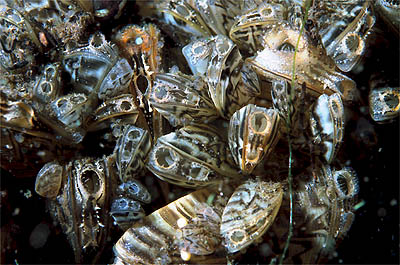
Zebra mussels
Zebra mussels – via Wikipedia

From the official press release . . .

Glacier National Park continues its boat inspections and permit process for this summer as part of an ongoing aquatic invasive species (AIS) prevention program. Westward expansion of zebra and quagga mussels, and other aquatic invasive species transported mainly on recreational watercraft, is driving regional water resource managers to ramp up existing AIS prevention strategies. Mussel infestations are increasing across the country, and present greater threats to park waters as more boats testing positive for mussels are intercepted in the northwest each year.

Invasive mussels are found on boats within Montana or passing through Montana on a regular basis. Eurasian watermilfoil and other invasive aquatic plants are also present in western Montana waterways, necessitating a high degree of vigilance to prevent spread.

A National Park Service inspection is required for all motorized and trailered watercraft. A self-certification permit is required for all non-trailered, hand-propelled watercraft. Park managers encourage all boaters to thoroughly clean, drain, and dry their watercraft and/or fishing equipment before coming to the park to prevent the spread of aquatic invasive species.

“We realize that recreational boaters will face added time and inconvenience while recreating in Glacier National Park,” said Brian McKeon, supervisor for the AIS Inspection Program. “The consequences of Aquatic Invasive Species becoming established in park waters at the headwaters for the Columbia, Missouri and Hudson Bay watersheds are dire for aquatic ecosystems, recreational opportunities, and economic concerns downstream.” Continue reading Glacier Park’s aquatic invasive species prevention program continues

Researchers plan wolverine study across four western states

Wolverine in snow - Steve Kroschel
Wolverine in snow – Steve Kroschel

A wide-ranging wolverine study starts up next winter . . .

Researchers are working on a plan to study wolverines in four Rocky Mountain states to see if the animals that look like small bears with big claws can be reintroduced to some regions to boost their numbers and see how they might travel between mountain ranges.

Montana, Idaho, Wyoming and Washington state are working together because there are so few wolverines and they are spread across a wide area, a researcher with Montana’s wildlife agency said.

“It doesn’t occur that often that four states start to think about managing a species together,” said Bob Inman, carnivore and fur bearer coordinator for Montana Fish, Wildlife and Parks.

Read more . . .

Also read: First verified North Dakota wolverine since 1870 may have come from Montana (Missoulian)

A lightning rod for grizzly recovery

Chris Servheen
Chris Servheen

Over at the Flathead Beacon, Dillon Tabish posted a long, outstanding article on Chris Servheen, who just retired after 35 years as the fed’s first grizzly bear recovery coordinator. Recommended reading . . .

Last week, inside his office on the University of Montana campus, Chris Servheen wrapped up his 35-year career as the federal government’s first and only grizzly bear recovery coordinator.

The occasion on April 29 passed without fanfare as the 65-year-old worked quietly and alone, the final minutes winding down on a career as turbulent as it was influential.

As the foremost person tasked with saving a species as iconic as the grizzly bear, which teetered on the brink of extinction only 50 years ago, Servheen has been at the center of controversy and scrutiny for much of the last four decades.

Read more . . .

U.S. Interior secretary touts public lands, funding in Montana

U.S. Interior Secretary Sally Jewell was at Hauser Lake near Helena last Tuesday, talking about public lands and funding. Kudos to Debo Powers for spotting this one . . .

U.S. Interior Secretary Sally Jewell spoke to a crowd of public land employees and conservationists at Hauser Lake northeast of here Tuesday to promote public land and full and permanent funding of the Land and Water Conservation Fund, raise awareness about the outdoors economy and unveil new funding for youth in conservation.

Speaking to the media afterward, she commented on the recent takeover of a national wildlife refuge in Oregon, the cancellation of an oil and gas lease in the Badger-Two Medicine area earlier this year and her decision not to visit coal-dependent communities in southeastern Montana.

Sen. Jon Tester, D-Mont., who traveled with Jewell, said Devil’s Elbow at Hauser Lake, a Bureau of Land Management campground, was a befitting place for the discussion because it has benefited from LWCF money in the past.

Read more . . .

Glacier Park grizzly bear monitoring continues

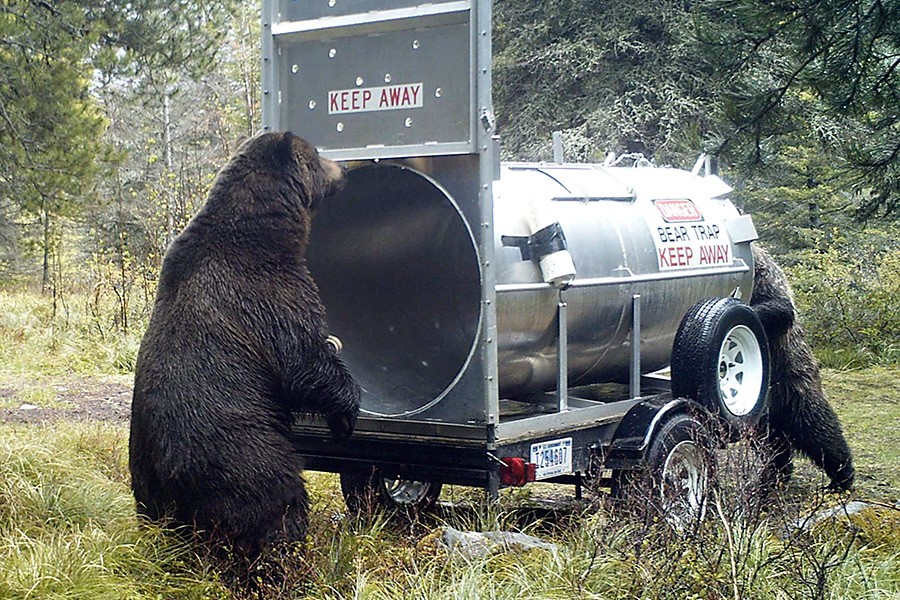
Curious bears investigate a bear trap in Glacier National Park - courtesy National Park Service
Curious bears investigate a bear trap in Glacier National Park – courtesy National Park Service

Here’s the annual announcement of the ongoing grizzly monitoring project in Glacier Park. It came with a really cool photo this time . . .

A long-term program to monitor grizzly bears in the Northern Continental Divide Ecosystem continues this summer in Glacier National Park. Park officials said Wednesday that wildlife managers will begin work next week to deploy bait stations, trail cameras and traps to capture grizzly bears.

The bait stations and trap sites will be marked with brightly colored warnings and closure signs. Visitors are asked to respect the posted signs and stay out of the bait station sites. The trapping efforts will continue into October.

The grizzly bear monitoring program began in 2004 and is led by the Montana Department of Fish, Wildlife and Parks.

Read more . . .

Also read: Biologists to Begin Seasonal Grizzly Bear Capturing for Research and Management (Montana FWP)

Marten shuts down world’s most powerful particle collider

The Large Hadron Collider uses superconducting magnets to smash sub-atomic particles together at enormous energies - CERN
The Large Hadron Collider uses superconducting magnets to smash sub-atomic particles together at enormous energies – CERN

This doesn’t relate directly to the North Fork, but it does contain a neat lesson about living with wildlife. Besides, the story was just too good to pass up . . .

A small mammal has sabotaged the world’s most powerful scientific instrument.

The Large Hadron Collider, a 17-mile superconducting machine designed to smash protons together at close to the speed of light, went offline overnight. Engineers investigating the mishap found the charred remains of a furry creature near a gnawed-through power cable.

“We had electrical problems, and we are pretty sure this was caused by a small animal,” says Arnaud Marsollier, head of press for CERN, the organization that runs the $7 billion particle collider in Switzerland. Although they had not conducted a thorough analysis of the remains, Marsollier says they believe the creature was “a weasel, probably.” (Update: An official briefing document from CERN indicates the creature may have been a marten.)

Read more . . .

Grizzlies potentially at risk on 2 million acres after delisting

Grizzly on ranch east of Yellowstone - Wyoming Game and Fish Department
Grizzly on ranch east of Yellowstone – Wyoming Game and Fish Department

Here’s a pretty good discussion of the issues grizzly bears could face in parts of Wyoming after delisting goes into effect. Kudos to Bill Fordyce for spotting this one . . .

Wyoming will “discourage” grizzly bears — likely by hunting — from thousands of square miles they currently occupy in the Yellowstone ecosystem, state officials said recently while describing pending plans.

Grizzly bears can’t easily live without conflict in 3,236 square miles they now occupy on the fringes of the Yellowstone ecosystem, Wyoming wildlife authorities say, and the federal government agrees. Consequently, grizzlies now living on some of the ecosystem edges won’t be counted in official censuses and will be moved off, killed or hunted, sometimes even before they conflict with human activities, pending state and federal plans say.

Nevertheless, after the U.S. Fish and Wildlife Service removes the Yellowstone-area grizzly from the list of threatened species — a process that could be completed by the end of this year — the agency will continue to monitor grizzly populations in the core of the ecosystem. Area managers will strive for a population of 674 bears in the 19,270 square-mile central zone known as Demographic Monitoring Area. If that population is well distributed and fecund with breeding females, there’s enough habitat and regulations to make federal wildlife managers confident grizzlies will persist.

Read more . . .

Ten Lakes travel management plan open for comments

Big Therriault Lake - Kootenai National Forest
Big Therriault Lake – Kootenai National Forest

If you wish to comment on the Ten Lakes travel management plan, You’ve got until May 13 . . .

The Kootenai National Forest is accepting public comments on its proposed Ten Lakes Travel Management Project, which would guide motorized recreation rules in and around the Ten Lakes Wilderness Study Area.

Comments are due May 13, with a draft environmental impact statement for the plan expected later that month. The forest hopes to release a final environmental impact statement in August.

The project area consists of the Ten Lakes Wilderness Study Area and some of the common entrance points surrounding it. The plan addresses motorized use, which includes snowmobiles, dirt bikes and four-wheelers, as well as mechanized uses such as mountain bikes.

Read more . . .

Glacier Park developing long-term fisheries plan

Native westslope cutthroat trout and bull trout

Glacier National Park is in the initial stages of developing an ambitions fisheries plan . . .

Glacier National Park Superintendent Jeff Mow announced last week the launch of a two-year comprehensive planning process to address large-scale issues affecting the park’s iconic lakes and streams, including non-native invasive species and climate change.

“Glacier National Park’s native aquatic ecosystems are essential in maintaining regional biodiversity,” said Mow. “However, the Park’s lakes and streams are increasingly threatened by non-native invasive fish and other organisms, and by the impacts of climate change. This plan will evaluate a variety of methods for addressing these threats in a comprehensive way.”

Park officials say the purpose of the plan is to develop an integrated and adaptive approach to the restoration, conservation and future management of native aquatic species and their habitats across the park, including the federally-listed threatened bull trout and the state-listed westslope cutthroat trout.

Read more . . .

To submit public comments online or view the scoping document, visit parkplanning.nps.gov/FishAquaticsPlanEIS. Comments can also be mailed to: Superintendent, Glacier National Park, Attn: Fish and Aquatics Plan/EIS, P.O. Box 128, West Glacier, Montana 59936.

See also:

Glacier considers ambitious fisheries research plan (Missoulian)

Glacier Park will hold meetings on fishery plan (Hungry Horse News)

Feds sued over bull trout recovery plan

Bull Trout
Bull Trout

As promised, the U.S. Fish and Wildlife Service is being sued over its bull trout recovery plan . . .

A pair of environmental groups on April 19 filed a lawsuit against the federal government alleging that the U.S. Fish and Wildlife Service’s plan to recover threatened bull trout is inadequate and violates the Endangered Species Act.

The groups, Alliance for the Wild Rockies and Friends of the Wild Swan, challenged the agency’s final recovery plan in U.S. District Court in Oregon, saying that it “fails to ensure the long-term survival and recovery.”

Bull trout were listed under the Endangered Species Act as “threatened” in 1999, and the FWS’ plan to recover the species is more than 15 years in the making. The plan, finalized last September, immediately drew criticism from conservation groups who for two decades have been at the vanguard of legal challenges on the road toward bull trout recovery.

Read more . . .

Also read: Bull Trout Recovery Plan, filed complaint (PDF, 240KB)