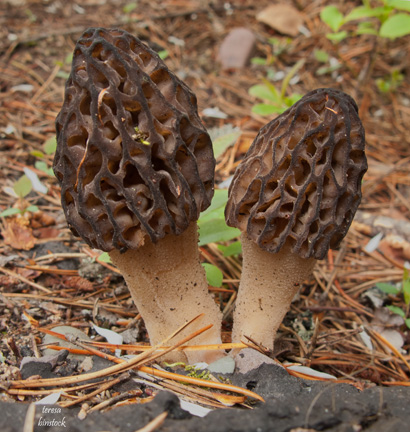
Morel mushrooms near West Glacier, Montana – Cathy McCoy
Yesterday’s (Wed., Aug. 31) NPR “Morning Edition” ran a piece on mushroom pickers in our region . . .
At a campground in northwestern Montana, 30 people are groggily gearing up for a day of mushroom picking.
Most are here because they want an excuse to get outside and taste some of Montana’s more exotic wild mushrooms. But others, like Matt Zaitz from Kansas, are here to turn a profit…
Zaitz can sell a pound of morel mushrooms for about $20. On a good day, which is by no means every day, Zaitz says he can bring in a harvest worth $500. He says there’s potentially millions of dollars to be made off mushrooms in Western public lands, especially in burn zones the summer after a big wildfire.
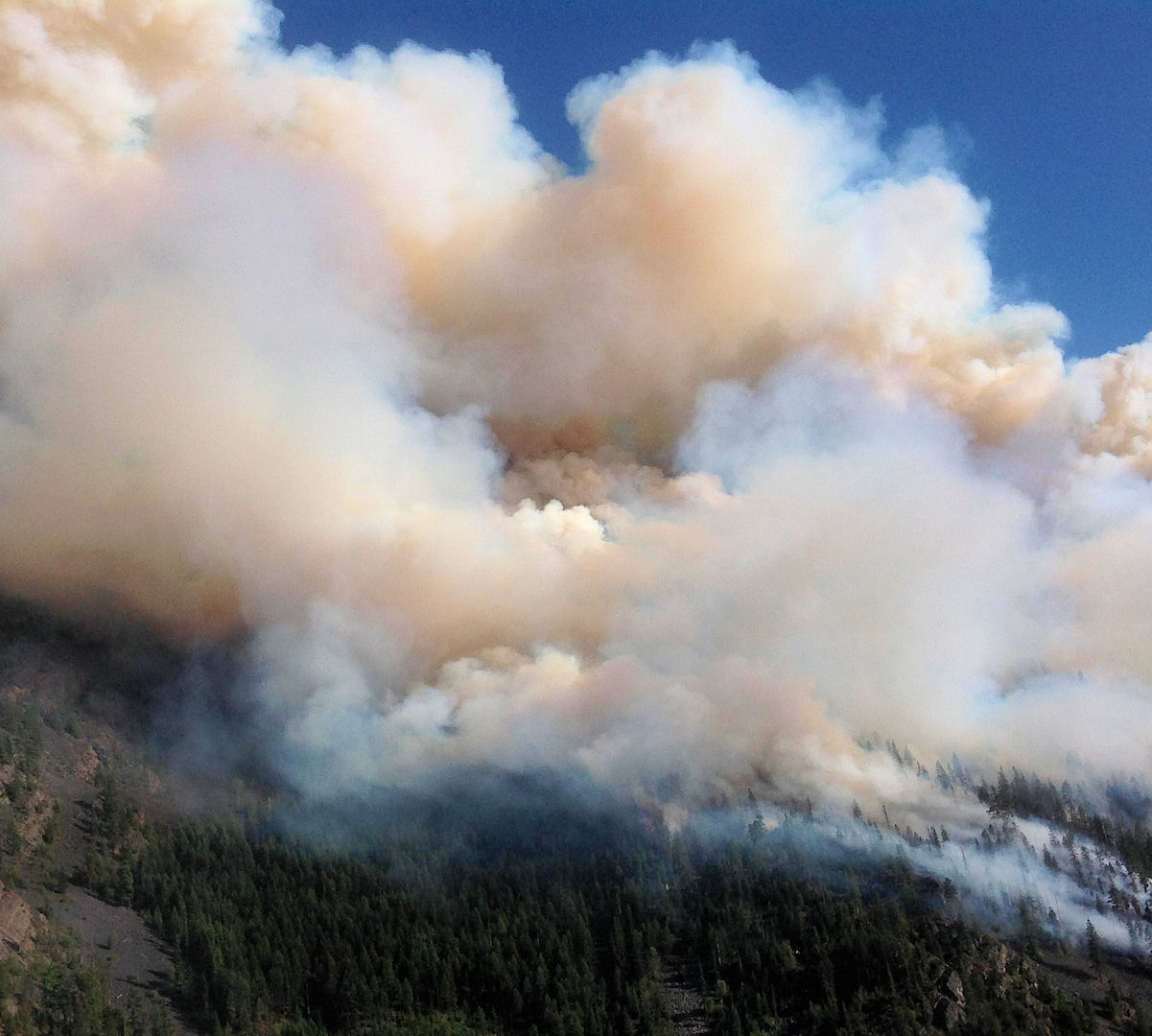
The Copper King Fire makes its initial run on Sunday, July 31, 2016
All that smoke in the North Fork today is from the Copper King Fire near Thompson Falls in the Lolo National Forest. The blaze has been burning in high, rugged terrain for better than three weeks. Dry, windy conditions added several hundred acres to the fire since yesterday (it’s now at 6908 acres officially) and brought some of the smoke up here.
Bull trout recovery is still a difficult problem . . .
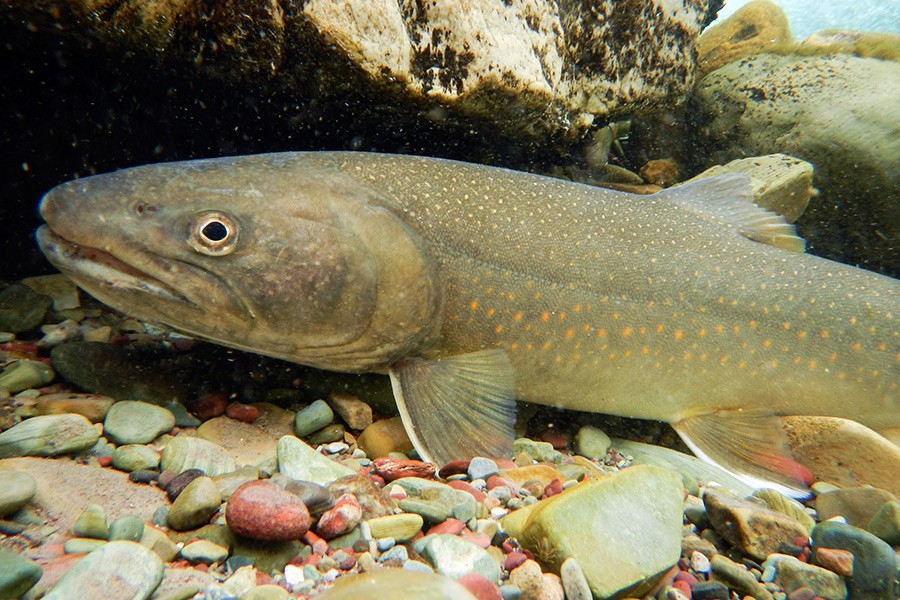
Bull trout numbers in the Flathead River drainage crashed so fast in the 1990s, they wound up on the Endangered Species list.
Their populations haven’t recovered, but the amount we know about a fish considered the “grizzly bear of the freshwater world” has zoomed upward even faster. That’s good news for the consortium of communities charged with keeping bull trout around.
The Northwest Power and Conservation Council’s meeting in Missoula last week got an update on the range of efforts to protect bull trout, from commercial netting of its chief rival in Flathead Lake to tinkering with the water temperature coming out of Hungry Horse Dam.
Representatives of several tribes held a gathering in Glacier Park to speak out in favor of retaining grizzly bear protections . . .
As federal wildlife managers prepare to move grizzly bears off the Endangered Species List in the Greater Yellowstone Ecosystem, opposition to delisting the iconic — and to many, sacred — animal has continued.
Led by several tribal nations, a crowd of roughly 100 people met at the eastern gateway of Glacier National Park on Friday for a “Prayer for the Great Bear” ceremony.
David Bearshield of the Cheyenne Nation sang a prayer in his native language with the shore of St. Mary’s Lake as the backdrop.
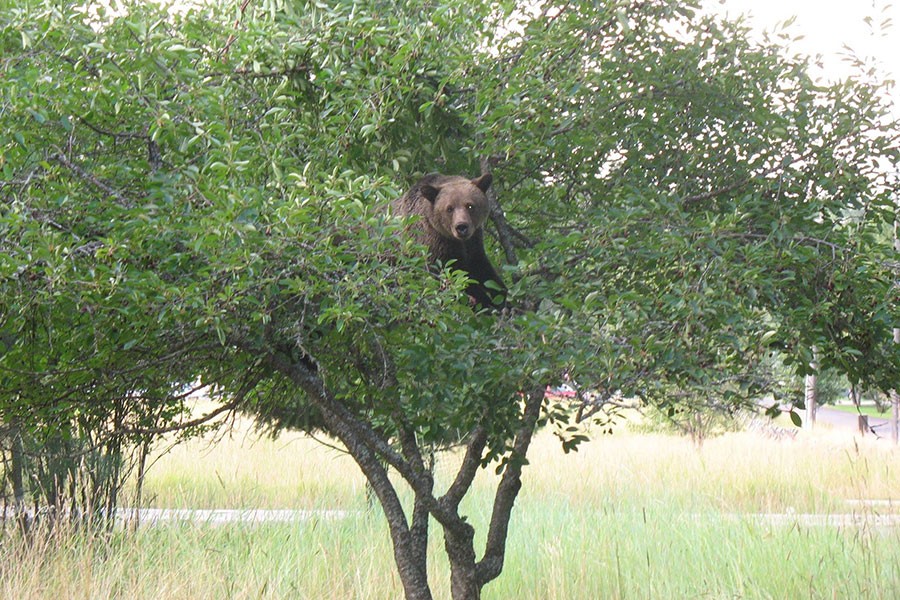
A young grizzly bear browses a cherry tree on Dakota Avenue in Whitefish, Aug 2016 – by Jan Metzmaker
Here’s the official press release regarding those two delinquent grizzlies that were captured near Whitefish and released near Frozen Lake a few days ago . . .
A young grizzly showed up in Whitefish on August 9 on Dakota Avenue in a residential area. Grizzly Bear Management Specialist Tim Manley set a trap in the late morning near the cherry tree the bear was observed in. The bear was seen several more times that evening near Wildwood Condos and the Lodge at Whitefish Lake.
The bear was captured in the trap on August 10 about noon. It was an unmarked, 2-year old male that weighed 158 pounds with no previous management history. The bear was released on August 11 near Frozen Lake on the BC border.
On the afternoon of August 9, a trap was set for a grizzly bear south of Blanchard Lake. The bear had gotten into dog food and garbage. That bear was captured early in the morning of August 10. It is an unmarked, 4-year old male, weighing 245 pounds with no previous management history. This bear was also released near Frozen Lake.
Both bears were fitted with GPS satellite collars.
Manley says that some grizzly bears are staying in the valley bottom to feed on serviceberry and hawthorn berries. Fruit trees also have apples, plums, and pears that are ripening up right now. Residents should pick their fruit as soon as possible and also make sure other attractants such as garbage, pet food, and bird feeders are not available.
The final official word on the fatal bear attack near West Glacier on June 29 . . .
Montana Fish, Wildlife & Parks (FWP) personnel have received additional information on the bear attack on a mountain biker on June 29 on Forest Service property a few miles south of West Glacier. Brad Treat, a law enforcement officer with the U.S. Forest Service, was fatally mauled when he encountered a bear while riding his mountain bike on the Green Gate/Half Moon trail system off of U.S. Highway 2. Treat was found dead by officers at the scene of the attack.
Based on the Wildlife Human Attack Response Team investigation, Treat collided with the bear in a surprise encounter on a section of trail that contains limited sight distances, which lead to a very short reaction time before the collision. The team collected evidence samples that were submitted in an effort to determine animal species, sex, DNA profile and whether this is a known or unknown bear.
The DNA results show that the bear involved in the collision and subsequent attack was a known male grizzly bear, approximately 20 years of age. This bear has no management history and as far as we know the bear has not had any previous conflicts with humans. The bear was captured and released in 2006 in Glacier National Park as part of an ongoing research project and at that time was aged at approximately 8 – 10 years. Due to the parameters of the research project the bear was not fitted with a radio collar. The bear was again identified through DNA from hair samples collected from rub trees in 2009 and 2011.
At this time, FWP has concluded its investigation into this incident.
Led by spiritual leaders of the Blackfoot Confederacy, tribal leaders from across North America will gather at Rising Sun in Glacier National Park on Friday, Aug. 12 to hold a prayer ceremony for the grizzly bear, which is considered sacred by tribes across the continent. The event will begin at 2 p.m.
The U.S. Fish and Wildlife Service has proposed removing federal protections under the Endangered Species Act for grizzlies in the Greater Yellowstone region.
Through a limited drawing, hunters could have the once-in-a-lifetime opportunity to kill a grizzly bear in Montana during a spring and fall season if the animal is delisted.
Tribal governments have expressed opposition on the basis of sovereignty, treaty, spiritual, and religious freedom violations.
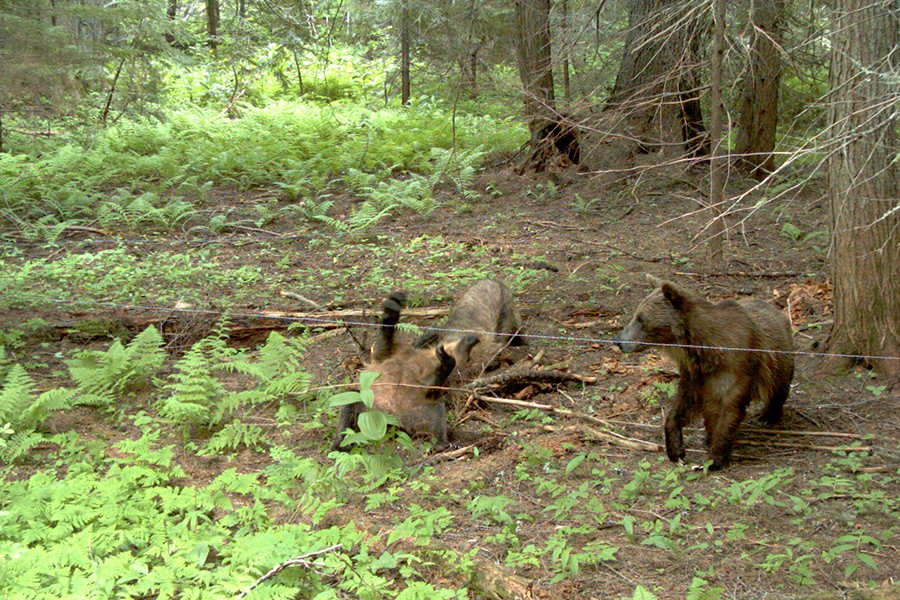
A 2009 trail cam photo of Irene, Bear 286, in the Cabinet Mountains – courtesy photo
It’s been a long haul getting grizzly bears reestablished in the Cabinet Mountains . . .
In the summer of 1993, biologists with the U.S. Fish and Wildlife Service captured a 2-year-old female grizzly bear in British Columbia, along the North Fork Flathead River about 10 miles from the U.S.-Canada border, northwest of Glacier National Park.
Before loading the 80-pound sub-adult onto a truck and spiriting her 150 miles away to the Cabinet Mountains in northwest Montana, the crew assigned her an official designation — Bear 286.
Biologist Wayne Kasworm affectionately called her Irene.
Here’s another take on an item we posted last week . . .
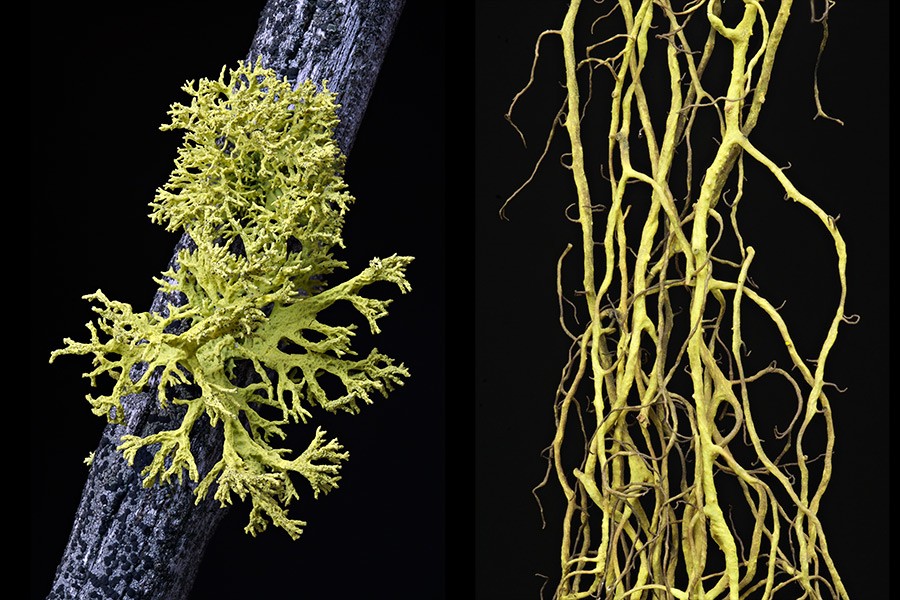
Dating back nearly 150 years, the textbook example of symbiosis has been lichen, which relies upon a mutualistic relationship between an alga and a fungus.
Now, that well-known dualistic relationship is being challenged.
Researchers at the University of Montana, working together with colleagues from Austria, Sweden and Purdue University, have found that some of the world’s most common lichen species actually are composed of three partners — not the widely recognized two.
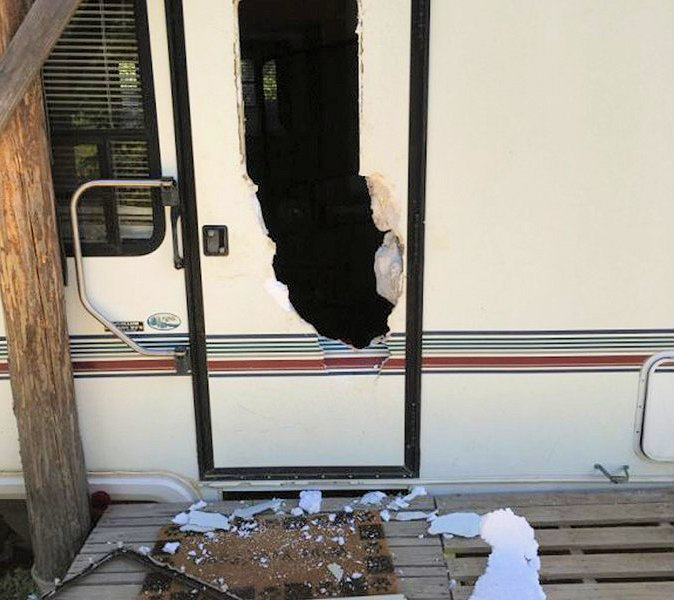
An adult female grizzly broke into three campers on private property south of Red Meadow Creek, July 28, 2016 – via Montana Fish, Wildlife & Parks
The day it was captured, I saw this bear eating serviceberries along the North Fork Road. Another unfortunate example of the fate of many bears that develop the habit of breaking into human structures in search of food. Darn it . . .
State wildlife managers killed a female grizzly bear after the animal broke into three camp trailers in the North Fork of the Flathead River drainage.
John Fraley, spokesperson for Montana Fish, Wildlife and Parks, said an adult female grizzly bear was captured July 29 on private property south of Red Meadow Creek. A bear had broken into three camp trailers, which were unoccupied at the time but where people had been living.
According to Grizzly Bear Management Specialist Tim Manley, the bear was captured in a culvert trap that was set within two feet of one of the trailers. The trailers had been broken into on the evening of July 28. Once inside the trailers, the bear ate dog food along with food in the cupboards.