All posts by nfpa

Montana governor allows bison to roam outside Yellowstone

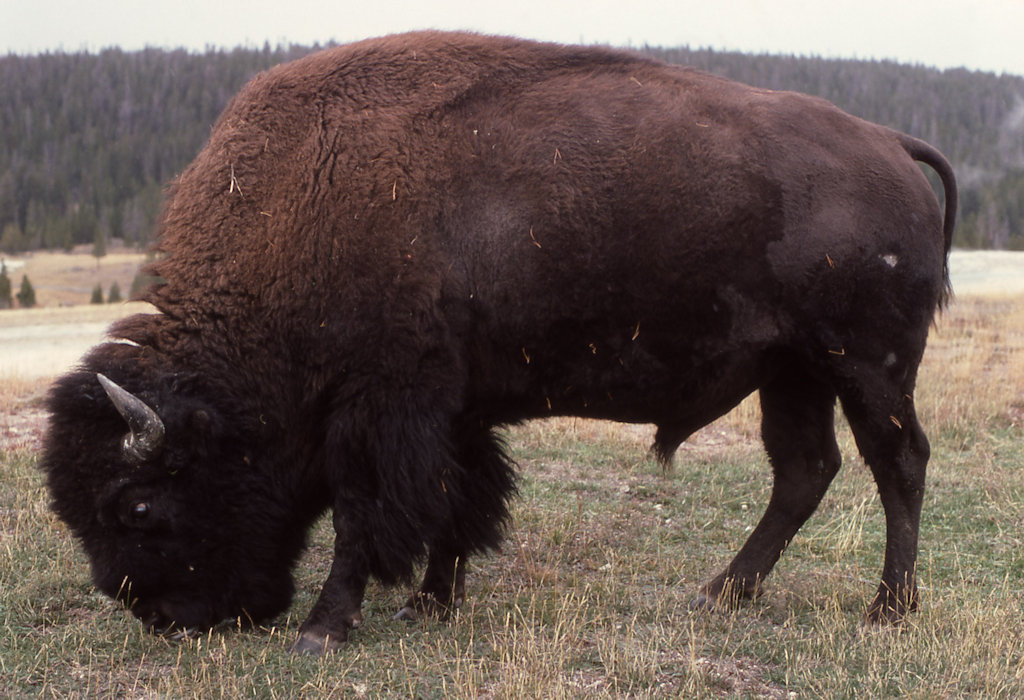
Close up of bison grazing

Well, the guy’s last name is “Bullock” after all . . .

Wild bison will be allowed to migrate out of Yellowstone National Park and stay in parts of Montana year-round under a Tuesday move by Gov. Steve Bullock that breaks a longstanding impasse in a wildlife conflict that’s dragged on for decades.

The Democratic governor’s decision likely won’t end the periodic slaughters of some bison that roam outside Yellowstone in search of food at lower elevations. But it for the first time allows hundreds of the animals to linger year-round on an estimated 400 square miles north and west of the park.

The move has been eagerly sought by wildlife advocates — and steadfastly opposed by livestock interests. Ranchers around Yellowstone are wary of a disease carried by many bison and the increased competition the animals pose for limited grazing space.

Read more . . .

Kootenai Forest stakeholder group reaches accord

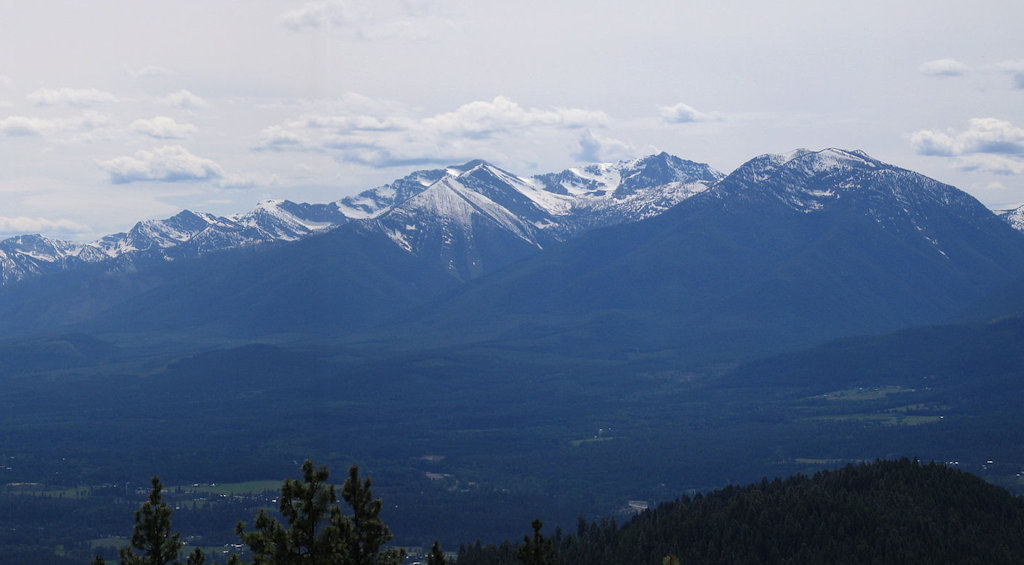
Southern Cabinet Mountains, as seen from Swede Mountain, near Libby

This is a decent summary of the status of the Kootenai Forest Stakeholders Coalition, including a discussion of a couple of rather contentious lawsuits stirring the pot over there . . .

A collaborative group representing stakeholders in and around the Kootenai National Forest announced an agreement last week that will guide its input on proposed land management projects.

The Kootenai Forest Stakeholders Coalition includes representatives from environmental, industry and recreation groups that often are at odds on forest policy. Robyn King, executive director of the Yaak Valley Forest Council, said the group was formed in 2006 to come up with a set of shared objectives to minimize litigation blamed for slowing down projects in the national forest.

“This is the guiding document that we would use, as a group, to make our comments to the U.S. Forest Service,” King said. “This is an organic document, so as we get out on the ground and see different applications being proposed by the U.S. Forest Service, we may make changes over time.”

Read more . . .

North American ecosystem shift 6,000 years ago caused by humans

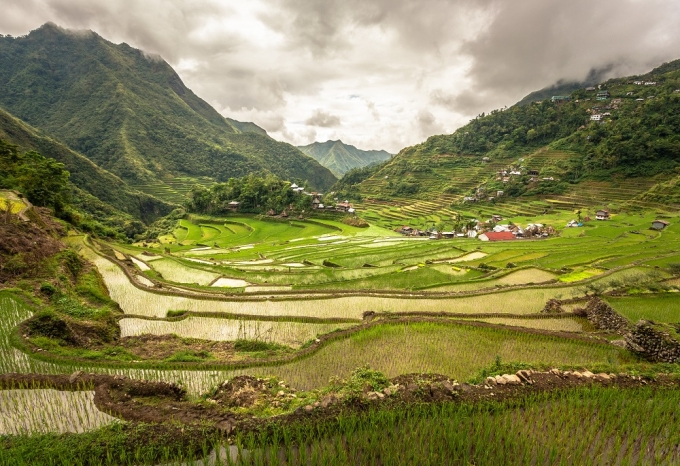
Terraced Farming

I’m not sure if the study referenced in this review has a solid statistical basis or not, but the findings certainly are fascinating. Researchers claim to have found evidence for an abrupt ecosystem shift in North America (!) triggered by the arrival of humans dependent on agriculture . . .

For the past 6,000 years, human beings have been having an extreme effect on the distribution of animals and plants across the globe, some of which had been in place for up to 300 million years, to the point that some species are more segregated from others than they have ever been. A research team from the Evolution of Terrestrial Ecosystems (ETE) program, led by S. Kathleen Lyons, performed a study that looked deeper into plants’ and animals’ distribution across the landscapes of the planet through fossil records.

The shift has been so dramatic that the team discovered that the consequences of a shift like this could usher in a new stage in global evolution equivalent to that of the evolution of complex organisms from single-cell microbes, according to Smithsonian Magazine.

The team decided to focus on locating patterns among plants and animals, filtering out the relationships that could be classified merely as chance. They looked at two types of relationships – pairs and segregations – to find these patterns. Pairs would include animals that occur together, like cheetahs and giraffes, which are often found in the same areas, while segregations would include animals that are not present when another is.

Read more . . .

LWCF makes it into spending bill; ‘fire-borrowing’ does not

Reauthorization for the Land and Water Conservation Fund made it into the pending omnibus spending bill, but the ‘fire-borrowing’ fix for funding large wildfires did not. The wildfire measure was tied to a set of logging measures that raised opposition on both sides of the aisle . . .

Proposals to speed up logging projects apparently killed chances for fixing the U.S. Forest Service’s “fire borrowing” problem as Congress moved an omnibus budget bill toward passage Wednesday.

The 2,009-page bill does include re-authorization of the Land and Water Conservation Fund, which was a bipartisan goal of Montana Republican Sen. Steve Daines, Republican Rep. Ryan Zinke and Democratic Sen. Jon Tester. But the Montana delegation’s push for categorical exemptions and expedited approvals of logging projects ran into opposition from both national environmental groups and Senate Republican leadership.

Both Senate Energy and Natural Resources Chairwoman Lisa Murkowski, R-Alaska, and ranking member Sen. Maria Cantwell, D-Wash., opposed including the Forest Wildfire Funding and Forest Management amendment that was backed by a large coalition of logging, recreation and conservation groups as well as members of Congress from both parties and the Agriculture Department.

Read more . . .

Diving artist-in-residence gains unique view of Glacier National Park

This article from the Hungry Horse News is best viewed in the print edition . . .

There have been plenty of artist-in-residence at Glacier National Park. Chris Gug is the first to dive right into his project, however — literally.

Gug recently spent a solid month photographing the Park’s underwater landscape. The Fort Lauderdale, Florida photographer has been diving and taking underwater photos since he was 15. He said he stumbled upon the application for Glacier Park’s program after he did a Google search for artists and Fort Lauderdale airport expansion.

Thanks be to Google, the Park’s artist program popped up in the search. “The more I talked to the Park, the more I wanted to do it,” he said.

Read more . . .

Climate impacts to hunting, fishing and wildlife heritage

Over at the Flathead Beacon, Tristan Scott posted an article on a recently released report by the National Wildlife Federation . . .

Montana’s hunters and anglers have as much vested in the Paris climate negotiations as the state’s abundant suite of wildlife, according to research compiled by the National Wildlife Federation, which recently released a report detailing what’s at stake culturally, ecologically and economically if a solution is not forthcoming.

As 150 world leaders at the 2015 United Nations Climate Change Conference hash out a binding agreement for curbing greenhouse gas emissions, scientists studying moose, cutthroat trout, mountain goats, and other wild animals in Montana are sounding the alarm about climate impacts in the Treasure State.

The National Wildlife Federation’s report is entitled “Game Changers: Climate Impacts to America’s Hunting, Fishing and Wildlife Heritage,” and outlines the historic role of hunters and anglers in conservation and the many ways in which the changing climate is affecting hunting and fishing opportunities and the state’s robust outdoor economy.

Read more . . .

Feds aim to maintain current Greater Yellowstone grizzly numbers

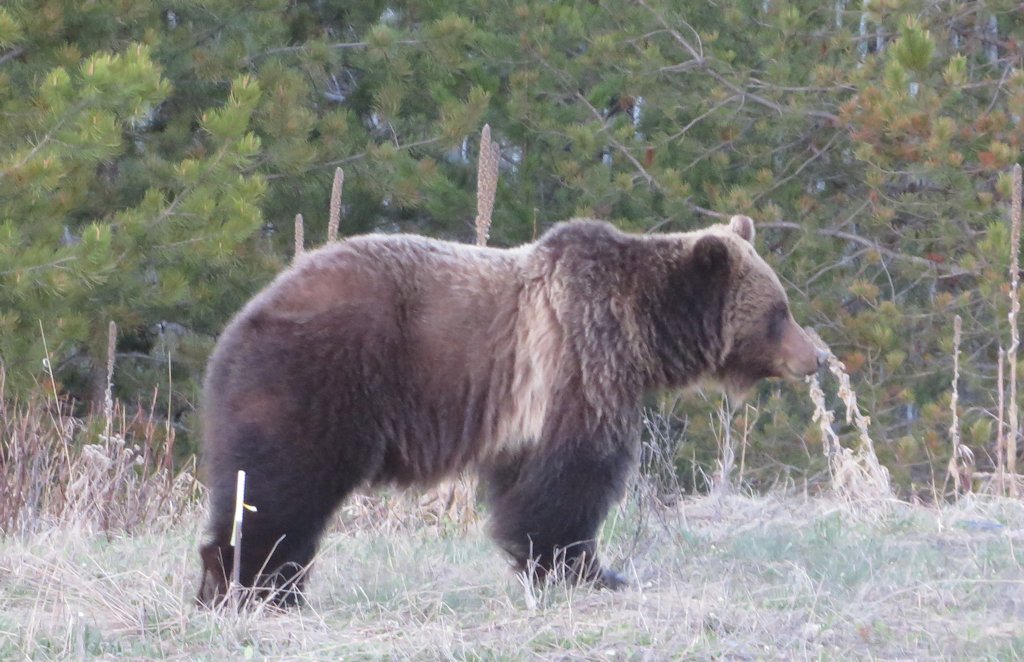
Grizzly bear sow with three cubs

Federal wildlife managers edge closer to delisting the grizzly bear . . .

Wildlife managers will seek to maintain grizzly bear numbers in the three-state Yellowstone region near current levels as they move toward lifting protections for the threatened species, a U.S. Fish and Wildlife Service spokeswoman said Wednesday.

The agency has set a management goal of 674 grizzly bears across the 19,300-square-mile region. That’s enough of the animals to “ensure a sustainable and resilient population,” spokeswoman Serena Baker said.

The population target is consistent with the average number of bears between 2002 and 2014. But it’s about 6 percent below the most recent tally of 714 bears at the end of 2014.

Read more . . .

Also read: Grizzly counting methods face scrutiny as delisting decision nears

‘Through Glacier Park’ a century later

Hiking in GNP

As if you didn’t already have a full schedule in December, here’s another worthwhile event, courtesy of the inimitable Chris Peterson’s love of hiking and photography . . .

On Dec. 16, local author and Hungry Horse News editor Chris Peterson will give a community presentation on Mary Roberts Rinehart’s book, “Through Glacier Park in 1915.”

Rinehart’s classic is a travelogue of her 300-mile journey through Glacier Park, during which she traveled on horseback through the park with a party of 40 people, including famed artist Charlie Russell.

A century later, in 2015, Peterson recreated Rinehart’s journey and her photographs, hiking 240 miles between April and September, meeting snow, rain, wind, heat, bears, and wildfires.

Hosted by the Glacier National Park Conservancy, Peterson’s free presentation will feature stories from his travels, and autographed copies of his book will be available for purchase, proceeds benefiting the conservancy.

The event takes place at Flathead Valley Community College’s Art and Technology building, at 7 p.m.

Keep reading . . .

Bear-proof storage getting better; still room for improvement

Cinca, May 5, 2015 by W K Walker

Here’s an update on the current state of bear-proof storage. I particularly like the bit about “Kobuk the Destroyer” . . .

An unexpected problem has developed in the world of bear-resistant food storage testing: The grizzly bears responsible for tearing containers to shreds are getting bored or depressed.

“With some of these containers, the bears are no longer interested in testing,” U.S. Forest Service national carnivore program leader Scott Jackson told the Interagency Grizzly Bear Committee meeting in Missoula on Tuesday. “For the metal cases that are bolted to the ground that they can’t tip over and knock around, that’s becoming more and more of a problem. They just lick the bait off the outside and leave them alone. The manufacturers are kind of left in limbo.”

In a way, that’s a good problem to have. Bear-resistant food storage rules apply to more and more places in the woods as both grizzlies and black bears add human food to their foraging plans. Next summer, floaters who win a coveted permit to spend a week on Montana’s Smith River must pack their steaks and beer in bear-resistant containers.

Read more . . .