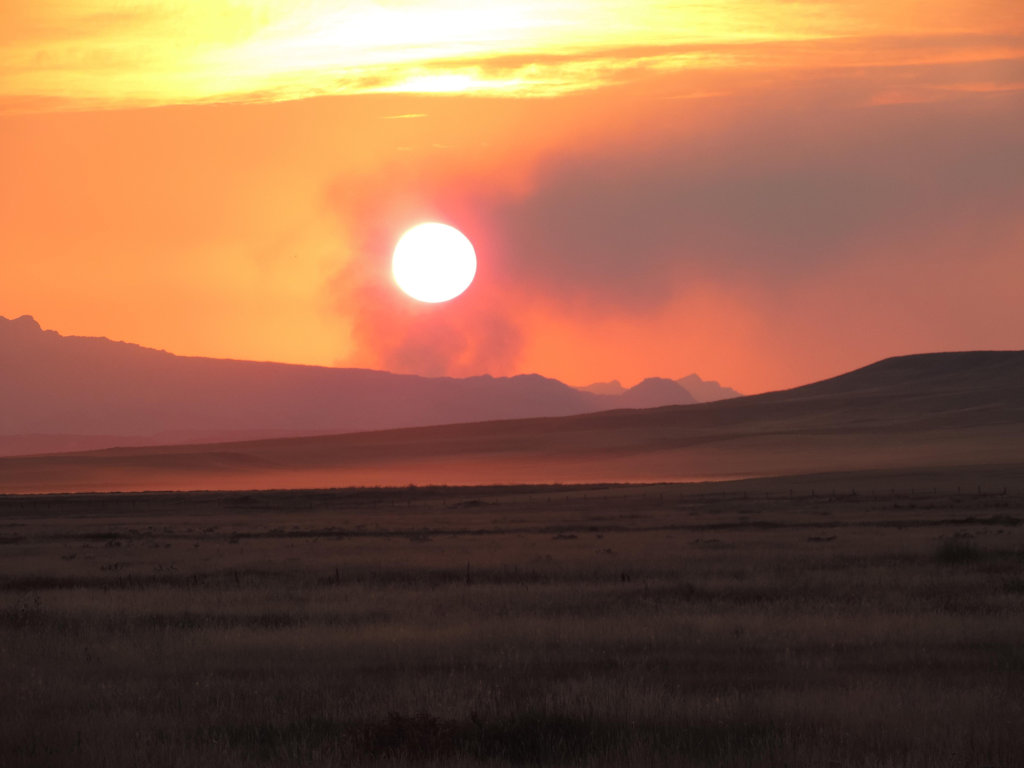
The Daily Inter Lake has a well-written retrospective on the past year’s extended fire season.
It’s in two parts. Here are the links:
The Daily Inter Lake has a well-written retrospective on the past year’s extended fire season.
It’s in two parts. Here are the links:
Here’s the latest from NASA on the looming El Niño weather pattern building in the Pacific . . .
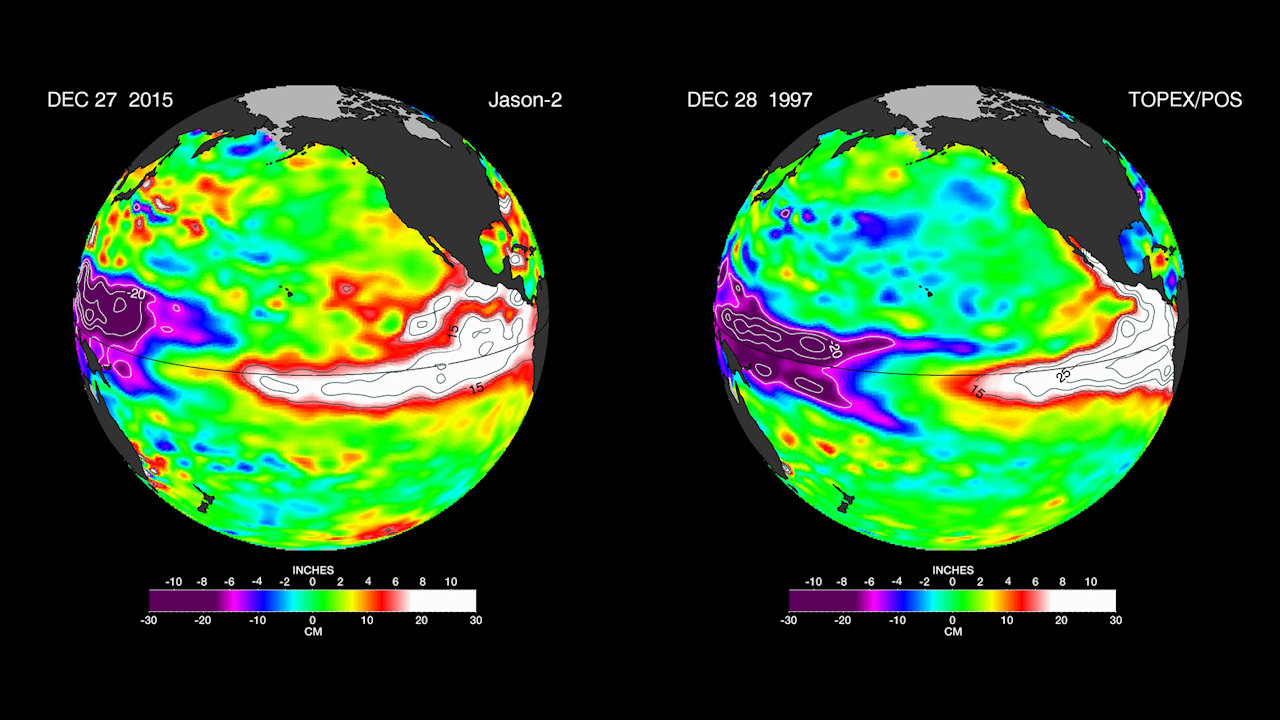
The current strong El Niño brewing in the Pacific Ocean shows no signs of waning, as seen in the latest satellite image from the U.S./European Ocean Surface Topography Mission (OSTM)/Jason-2 mission.
El Niño 2015 has already created weather chaos around the world. Over the next few months, forecasters expect the United States to feel its impacts as well.
The latest Jason-2 image bears a striking resemblance to one from December 1997, by Jason-2’s predecessor, the NASA/Centre National d’Etudes Spatiales (CNES) Topex/Poseidon mission, during the last large El Niño event. Both reflect the classic pattern of a fully developed El Niño…
From a recent MWA email announcement . . .
Beginning this January, Montana Wilderness Association is offering 43 guided snowshoe and regular walks across some of the state’s most magnificent backcountry.
Now in its 13th season, MWA’s Winter Wilderness Walks program offers hikers of all ages and experience levels an opportunity to participate in a traditional recreation opportunity while enjoying Montana’s quiet beauty and treasured wild places. Winter Wilderness Walks also present a great way to meet new people, explore, and view wildlife in a winter setting.
All outings are free and open to the public, but participants need to preregister online. MWA will provide snowshoes for participants if necessary.
View the complete Winter Walks schedule
and pre-register now.
For more information, contact Amanda Hagerty at (406) 443-7350 ext. 108 or email her ahagerty@wildmontana.org.
From the press release . . .
The Flathead Community of Resource Educators (CORE), a network of individuals and organizations working together to increase awareness and understanding about the natural, historical and cultural resources of the Flathead Region, is celebrating Winter Trails on Saturday, January 9 with several free outdoor activities.
These free activities are a great way to enjoy the outdoors in winter and discover the fitness and social benefits of snowshoeing in Northwest Montana. All activities are suitable for beginners and families. Be prepared with warm clothing and wear sturdy hiking shoes or boots.
A snowshoe walk on the Flathead National Forest, hosted by the Swan Lake Ranger District, Flathead Audubon and Foy’s to Blacktail Trails, will be held at the Blacktail Mountain cross-country ski trails near Lakeside, 10a.m. to Noon. Participants may bring snowshoes, or a limited number of children and adult shoes will be available by reservation. Please meet at the upper trailhead parking area. Reservations are not required. For more information or to reserve snowshoes, please contact the Swan Lake Ranger District at 837-7500.
Explore Lone Pine State Park on snowshoes. From 10a.m. to 5p.m., park visitors can borrow snowshoes and explore the many park trails. Adult and children’s snowshoes are available on a first-come, first-served basis. A ranger-led snowshoe walk takes place at 11am. Please contact the park at 755-2706 for more information and to reserve snowshoes for the 11am walk.
Ranger-led snowshoe hikes at Glacier National Park will take place at 10:30am and 2:00pm. Each hike will last approximately two hours and reservations are not required. Snowshoes are available for hike participants. Visitors need to purchase a park entrance pass. Please meet at the Apgar Visitor Center. Call 888-7800 for more information.
For more information about local events and Winter Trails visit, www.wintertrails.org
The Daily Inter Lake posted a pretty thorough article on the regional annual bird count. Our own Steve Gniadek gets a mention . . .
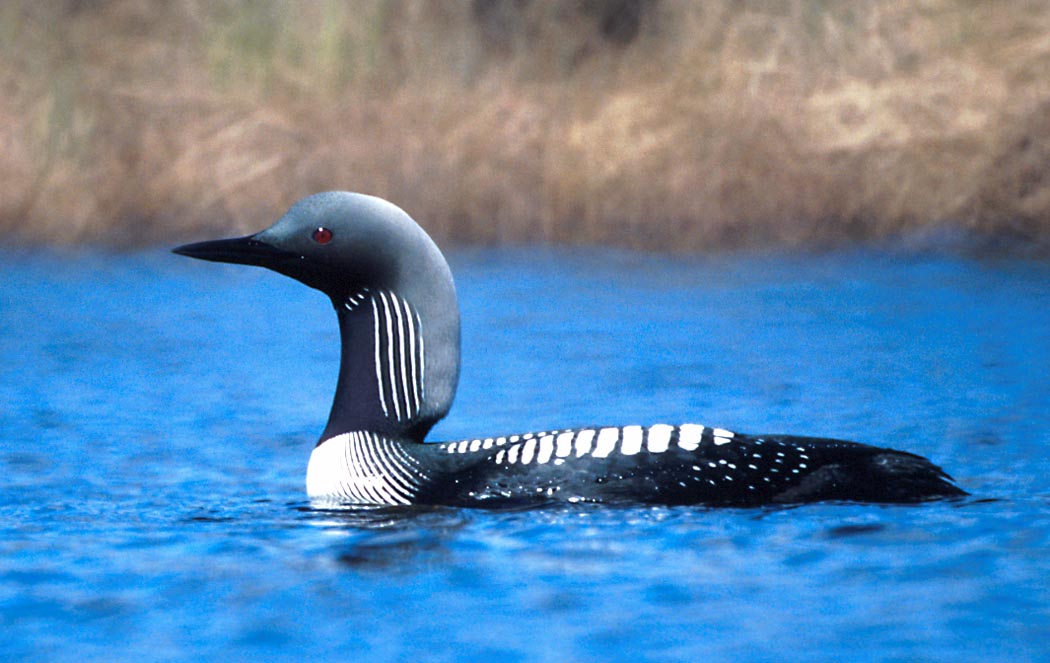
Rare visitors to Montana, a pair of Pacific loons bobbed along in the gentle swells of Flathead Lake on a chilly morning Dec. 19.
About 1,000 feet from the shore, the vivid black-and-white stripes along the birds’ backs and necks would appear momentarily in Craig Hohenberger’s spotting scope, then vanish behind another wave.
“They’re more of a fall bird,” Hohenberger, a retired ornithologist, explained, automatically adding “golden-crowned kinglet” as he picked up the barely audible call from an unseen bird. “It’s normally around October you might see them.”
Well, the guy’s last name is “Bullock” after all . . .
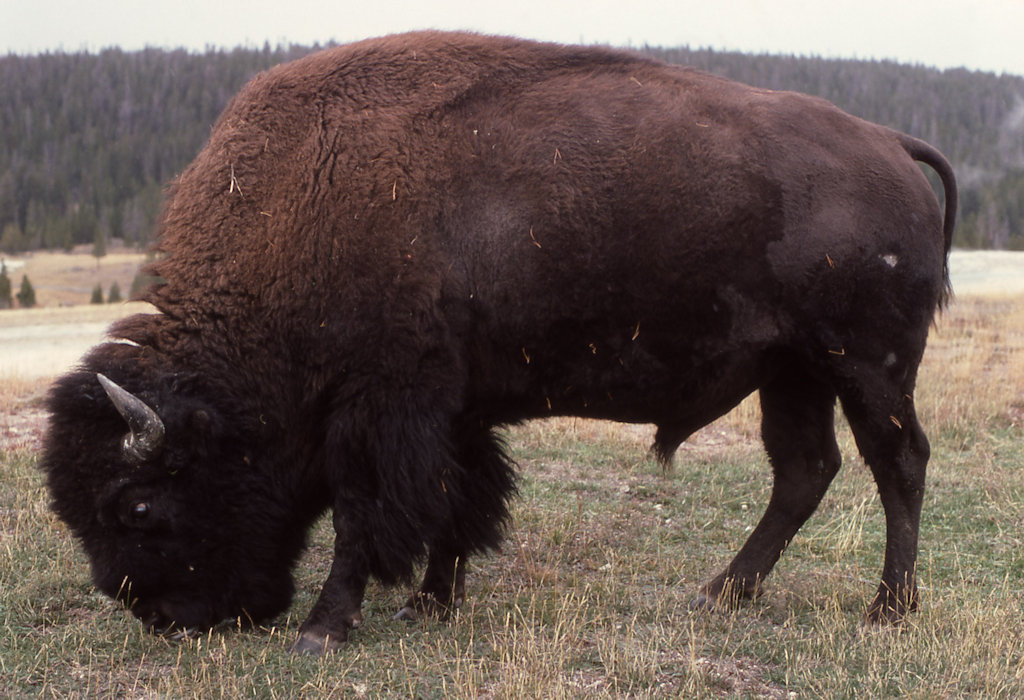
Wild bison will be allowed to migrate out of Yellowstone National Park and stay in parts of Montana year-round under a Tuesday move by Gov. Steve Bullock that breaks a longstanding impasse in a wildlife conflict that’s dragged on for decades.
The Democratic governor’s decision likely won’t end the periodic slaughters of some bison that roam outside Yellowstone in search of food at lower elevations. But it for the first time allows hundreds of the animals to linger year-round on an estimated 400 square miles north and west of the park.
The move has been eagerly sought by wildlife advocates — and steadfastly opposed by livestock interests. Ranchers around Yellowstone are wary of a disease carried by many bison and the increased competition the animals pose for limited grazing space.
This is a decent summary of the status of the Kootenai Forest Stakeholders Coalition, including a discussion of a couple of rather contentious lawsuits stirring the pot over there . . .
A collaborative group representing stakeholders in and around the Kootenai National Forest announced an agreement last week that will guide its input on proposed land management projects.
The Kootenai Forest Stakeholders Coalition includes representatives from environmental, industry and recreation groups that often are at odds on forest policy. Robyn King, executive director of the Yaak Valley Forest Council, said the group was formed in 2006 to come up with a set of shared objectives to minimize litigation blamed for slowing down projects in the national forest.
“This is the guiding document that we would use, as a group, to make our comments to the U.S. Forest Service,” King said. “This is an organic document, so as we get out on the ground and see different applications being proposed by the U.S. Forest Service, we may make changes over time.”
Reauthorization for the Land and Water Conservation Fund made it into the pending omnibus spending bill, but the ‘fire-borrowing’ fix for funding large wildfires did not. The wildfire measure was tied to a set of logging measures that raised opposition on both sides of the aisle . . .
Proposals to speed up logging projects apparently killed chances for fixing the U.S. Forest Service’s “fire borrowing” problem as Congress moved an omnibus budget bill toward passage Wednesday.
The 2,009-page bill does include re-authorization of the Land and Water Conservation Fund, which was a bipartisan goal of Montana Republican Sen. Steve Daines, Republican Rep. Ryan Zinke and Democratic Sen. Jon Tester. But the Montana delegation’s push for categorical exemptions and expedited approvals of logging projects ran into opposition from both national environmental groups and Senate Republican leadership.
Both Senate Energy and Natural Resources Chairwoman Lisa Murkowski, R-Alaska, and ranking member Sen. Maria Cantwell, D-Wash., opposed including the Forest Wildfire Funding and Forest Management amendment that was backed by a large coalition of logging, recreation and conservation groups as well as members of Congress from both parties and the Agriculture Department.
Wonder what we’ve been doing since August? Head over to the newly updated activities page for a summary.
This article from the Hungry Horse News is best viewed in the print edition . . .
There have been plenty of artist-in-residence at Glacier National Park. Chris Gug is the first to dive right into his project, however — literally.
Gug recently spent a solid month photographing the Park’s underwater landscape. The Fort Lauderdale, Florida photographer has been diving and taking underwater photos since he was 15. He said he stumbled upon the application for Glacier Park’s program after he did a Google search for artists and Fort Lauderdale airport expansion.
Thanks be to Google, the Park’s artist program popped up in the search. “The more I talked to the Park, the more I wanted to do it,” he said.