Category Archives: News

Bear-proof storage getting better; still room for improvement

Cinca, May 5, 2015 by W K Walker

Here’s an update on the current state of bear-proof storage. I particularly like the bit about “Kobuk the Destroyer” . . .

An unexpected problem has developed in the world of bear-resistant food storage testing: The grizzly bears responsible for tearing containers to shreds are getting bored or depressed.

“With some of these containers, the bears are no longer interested in testing,” U.S. Forest Service national carnivore program leader Scott Jackson told the Interagency Grizzly Bear Committee meeting in Missoula on Tuesday. “For the metal cases that are bolted to the ground that they can’t tip over and knock around, that’s becoming more and more of a problem. They just lick the bait off the outside and leave them alone. The manufacturers are kind of left in limbo.”

In a way, that’s a good problem to have. Bear-resistant food storage rules apply to more and more places in the woods as both grizzlies and black bears add human food to their foraging plans. Next summer, floaters who win a coveted permit to spend a week on Montana’s Smith River must pack their steaks and beer in bear-resistant containers.

Read more . . .

Grizzlies keep pushing out onto high plains

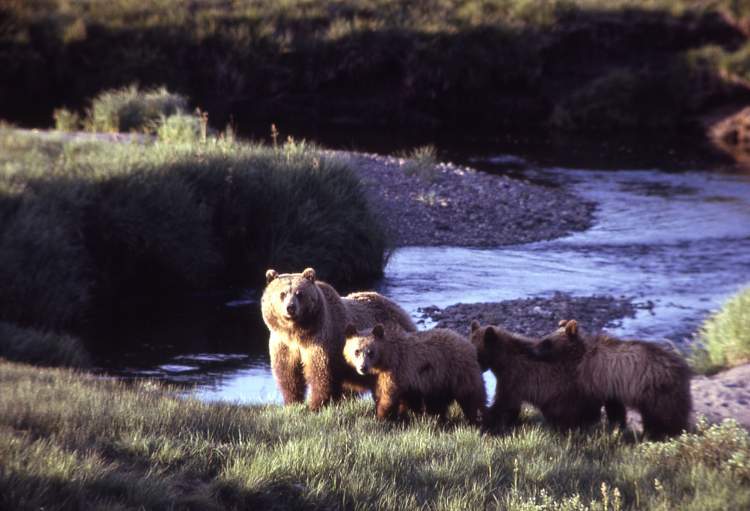
Grizzly bear sow with three cubs

Grizzlies continue to move down from the mountains and out into their old range on the high plans . . .

As the lone grizzly bear expert for the Montana Fish, Wildlife and Parks’ Region Four office, Mike Madel hasn’t had any problems keeping busy along the Rocky Mountain Front. “It was a heck of a year,” he said during a presentation to regional grizzly experts Wednesday near Kalispell. “We had bears expanding way out into the plains again, and further than we’ve ever had them.”…

The range of grizzly bears along Montana’s Northern Continental Divide has roughly doubled since they received federal protection under the Endangered Species Act in 1975, and much of that new territory has been east of the Rockies.

Grizzlies are increasingly present on the Blackfeet Indian Reservation, often following the winding, tree-lined drainages that extend east from the mountains. Even Great Falls might not be immune to the encroaching bears for long.

Read more . . .

Also read: State, federal grizzly bear experts to meet in Missoula

Lawsuit over Badger-Two Medicine leases retreats behind closed doors

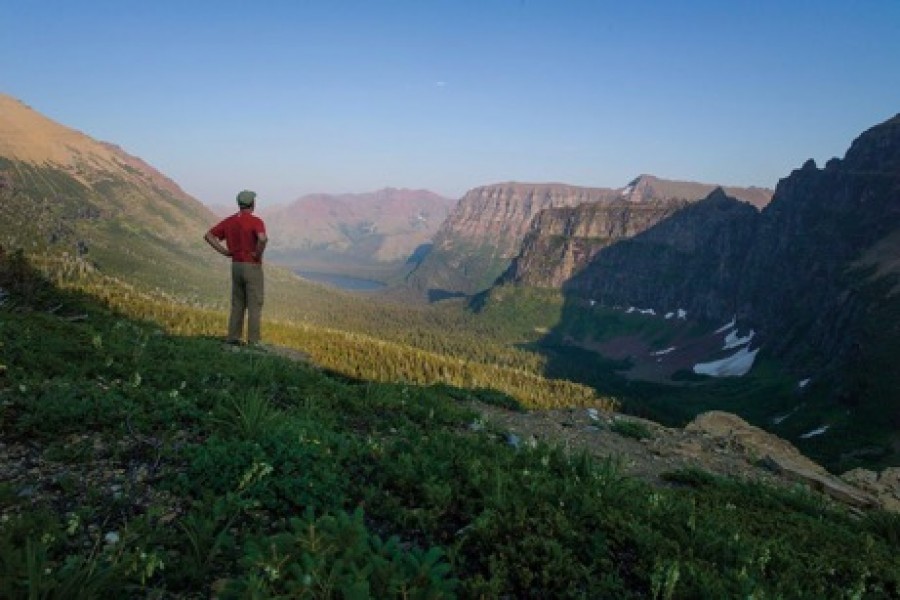
Badger-Two Medicine Region

Here’s a non-surprise: After the Solonex lawsuit forced the federal government to take an official stance on the issue of energy leases in the Badger-Two Medicine region, attorneys on both sides want to move the discussion behind closed doors for a while . . .

The Interior Department and a Louisiana energy company are asking a federal judge to pause court proceedings in a dispute over a drilling lease near Glacier National Park.

Attorneys for the two sides said in a Wednesday court filing that they want more time to see if they can resolve the case outside of court.

They asked U.S. District Judge Richard Leon to put the case on hold until Jan. 8.

Read more . . .

Montana FWP recommends purchase of Haskill Basin and Trumble Creek easements

Some good news: Montana FWP recommended purchasing conservation easements on better than 10,000 acres in the north end of the Flathead Valley . . .

Public comments are in, and two proposed major conservation easement purchases in the Flathead Valley – including one that would protect the primary source of Whitefish’s water supply – are moving forward.

Montana Fish, Wildlife and Parks on Monday recommended the FWP Commission immediately approve the purchase of a $16.7 million easement on more than 3,000 forested acres in Haskill Basin north of Whitefish.

The agency also recommended the commission approve the purchase of a $9.5 million easement on more than 7,000 acres northwest of Columbia Falls in the Trumble Creek area once the conservation easement and associated management plan are finalized, and other due diligence is completed.

Read more . . .

Bull trout redd counts down in Northwest Montana

Bull Trout

Bull trout numbers are down in this year’s survey, but changes to stream flows may account for most of this . . .

Low flows and stream blockages may have contributed to some lower-than-usual spawning results in the annual northwest Montana bull trout survey this fall.

“In some streams, our annual index sections were not accessible to fish due to debris jams, beaver dams or other flow-related conditions, resulting in lower-than-expected counts,” said Tom Weaver, Montana Fish, Wildlife and Parks bull trout specialist in Kalispell. However, he said the overall count indicates numbers of the federally threatened species remain stable in the region.

Read more . . .

Report on last week’s Interagency Grizzly Bear Committee meeting

Interagency Grizzly Bear Committee Meeting

From Debo Powers, NFPA President, comes the following report . . .

Representatives from all of the agencies who manage and/or research grizzly bears in the Northern Continental Divide Ecosystem (NCDE) met on Wednesday, December 2, at Lone Pine State Park near Kalispell to share information about grizzly bear recovery efforts.  The meeting room was packed with agency personnel, scientists, representatives from conservation groups (including NFPA), and the general public.

Chris Servheen, who reported on the Grizzly Bear Conservation Strategy, said that they are building the foundation for delisting grizzly bears, but are not ready to make that proposal yet.  He indicated that the Conservation Strategy should be finalized by the end of 2016.  He stated that within the next ten years, there should be connectivity (bears moving freely) between the NCDE and Yellowstone which will insure genetic viability between these bear populations.

Bear Management specialists from each district (including Tim Manley) reported on 2015 bear management activities, including human conflicts.  According to Tim, chickens topped the list of attractants causing bear problems.  Cat food was the second biggest problem.

Each agency (FS, FWP, DNR, GNP, BLM, FWS, Salish Kootenai and Blackfoot Tribes) gave updates related to the Draft Habitat Standards for the lands that they manage.
Cecily Costello (who replaced Rick Mace after he retired) presented updated figures on Population Monitoring.  Estimates are that there are 837-1039 grizzlies in the NCDE with a 2.3% increase in the population each year.  (This is a smaller increase than the estimates that Rick Mace made in 2012 which showed a 3.1% increase annually.)

Tabitha Graves presented research on how climate change is affecting huckleberries, which is a keystone species for lots of wildlife including grizzlies.  Food supply affects reproduction and survival.  This year, the berry size was smaller and there was lower productivity.  There was a month difference in the timing for berry development this year and scientists are expecting this year’s weather patterns to happen more frequently.  The question is:  In future seasons, how will this affect grizzly populations and the number of human conflicts if food is scarce?

The meeting ended with a few questions from the public.

Tribes object to delisting of grizzly bear; take fight to DC

Cinca, May 5, 2015 by W K Walker

Tribal leaders in the United States and Canada have registered strong objections with the U.S. federal government over its intent to remove the grizzly bear from the Endangered Species List. Native News Online posted two stories on this conflict recently. The first discusses the visit of a tribal delegation to various federal offices early this month . . .

Tribal leaders took the fight to save grizzly bears from trophy hunters’ guns, and in the process defend tribal spiritual rights and sovereignty, to the highest offices of the federal government last week. What began with a loudly applauded announcement denouncing the delisting of the grizzly bear from the Endangered Species Act (ESA) by NCAI President, Brian Cladoosby, in the presence of Interior Secretary Sally Jewell, concluded with a delegation of tribal leaders meeting with Deputy Secretary of the Interior, Mike Connor, and US Fish and Wildlife Service (FWS) Director, Dan Ashe.

Over forty tribes have issued declarations and resolutions opposing the delisting of the Yellowstone grizzly bear from the ESA, a status change that will hand management of the grizzly to the states of Wyoming, Idaho and Montana, all of which intend to operate high-dollar trophy hunts of the grizzly on sacred and ancestral tribal homelands. Removing federal protections from the grizzly will also remove the existing protections on the lands the bear occupies, loosening restrictions on energy, livestock and timber leases on approximately two million acres of Greater Yellowstone.

Coalescing around GOAL Tribal Coalition, tribal nations state that delisting the grizzly is contrary to tribal interests and will cause irreversible damage to tribal cultural practices due to the significance of the grizzly in foundational narratives and ceremonies. “The grizzly bear is sacred to us. We want the grizzly bear to remain protected. We do not want the states trophy hunting the grizzly bear,” insists Vice Chairman Tyler.

Continue reading . . .

A couple of weeks later, the Assembly of First Nations in Canada weighed in on the matter . . .

The Assembly of First Nations (AFN) National Chief, Perry Bellegarde, has petitioned President Barack Obama to “reconsider the decision to delist the grizzly bear from the Endangered Species Act (ESA) and to permit States to profit from trophy hunts of this sacred being.” The AFN is a national advocacy organization representing First Nation citizens in Canada, which includes more than 900,000 people living in 634 First Nation communities and in cities and towns across the country.

The AFN’s just released letter comes in the wake of a delegation of tribal leaders meeting with the White House Council, and House and Senate offices on Capitol Hill. During those meetings, Congressman Raúl Grijalva (D-AZ) indicated to the envoys for the massed tribal opposition that he would take up the fifty-strong tribal coalition’s fight. Tribes state that delisting the grizzly bear is contrary to tribal interests and will cause irreversible damage to tribal cultural practices due to the significance of the grizzly in ceremonies integral to tribal religions.

Tribes are insisting that the “thorough” and “meaningful” consultation with the US Fish and Wildlife Service (FWS) mandated by President Obama in his 2013 Executive Order creating the White House Council on Native American Affairs be honored, along with a raft of other treaties, acts, executive orders, secretarial orders, and laws.

Continue reading . . .

Interior Department plans to cancel Badger-Two Medicine leases

Badger-Two Medicine Region

No surprise here, but it is good to see the official ruling from the U.S. Department of the Interior concerning the contentious oil and gas leases in the Badger-Two Medicine . . .

The U.S. Department of the Interior announced its aim to cancel a contentious oil and gas lease in the Badger-Two Medicine area, a landscape that connects the Bob Marshall Wilderness to Glacier National Park and is considered a sacred cultural reserve by the Blackfeet Nation.

In a court-ordered response filed Nov. 23, attorneys for the Interior Department submitted a decision hailed by tribal leaders, conservation groups and political leaders as a “critical step forward” in the pursuit of furnishing permanent protections on the region.

The decision follows an earlier recommendation by the U.S. Forest Service that energy exploration on the 165,000-acre parcel would irreparably damage the area’s cultural and historic significance.

Read more . . .

Things looking up for black-footed ferrets

Black-footed ferret

A lengthy but interesting article on efforts to reintroduce the black-footed ferret . . .

No one said trapping black-footed ferrets at night in the remote Wyoming plains was easy. Even biologists admit spotlighting the nocturnal 3-pound critters hiding among sagebrush and tall, cured grass is probably not the most effective method.

But for right now, it’s the only way to survey one of a handful of colonies of an animal once thought extinct.

“We’re looking for eye shine of ferrets,” said Nichole Bjornlie, Wyoming Game and Fish Department’s nongame biologist, as she bumped along a dark, rutted road in late August. “They have a very, very bright blue turquoise.”

Read more . . .

The rise of the conservative conservationist

Tristan Scott over at the Flathead Beacon has a long, very interesting article discussing the conservation movement on the right side of the political spectrum. . .

It’s late August in Montana and the North Fork of the Flathead River is running low and slow, snaking through a chalky corridor of wildfire smoke, its steep banks inscribed with the tracks of deer and grizzly bears, wallpapered with a mix of blackened snags and young lodgepole pine, and scored with clusters of radiant fireweed.

The smoke blotting the sky overhead hangs in contrast against the transparency of the water below, magnifying the burnished bottom-stones and the shimmering flashes of bull trout, rainbows and cutties.

Somewhere downstream from the Glacier Rim river access, about 10 miles north of Columbia Falls, a ClackaCraft drift boat cuts through the glassy surface, which longtime fly-fishing guide and oarsman Irv Heitz navigates from his perch in the middle of the boat, rowing and setting his clients up on fish. At the bow, U.S. Sen. Steve Daines, dressed in zip-off Columbia cargo pants and a T-shirt, leans against the boat’s leg bracket, casting a dry fly at the tail of a riffle that’s usually filthy with trout.

Read more . . .