All posts by nfpa

The photos that inspired the creation of that occupied Oregon refuge

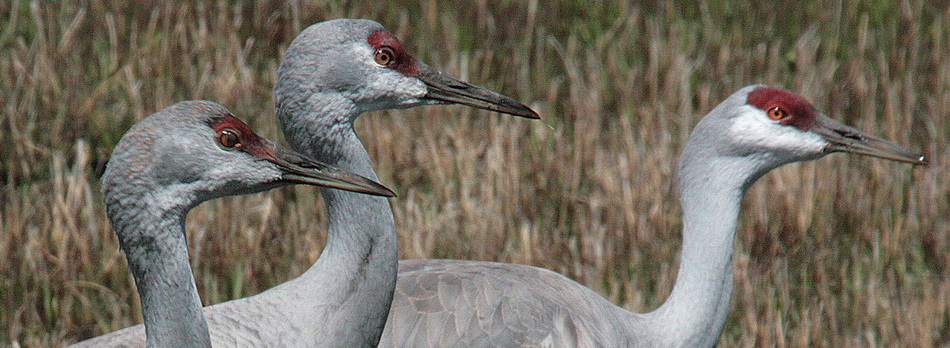
Crane Faces - Malheur National Wildlife Refuge

The Malheur National Wildlife Refuge wasn’t widely known beyond the birding community until it acquired its current “Y’all Qaeda” infestation. Here’s some background, from NPR . . .

The armed militants occupying Malheur National Wildlife Refuge in Eastern Oregon come from as far away as Texas and Montana. But they are hardly the refuge’s first out-of-state visitors. Malheur Lake is a regional hub for hundreds of thousands of migrating waterfowl. By some measures, it boasts the greatest diversity of bird species in the entire state.

A century ago, that diversity attracted the attention of naturalist William Finley. He visited the lake in 1908 with his childhood friend and photography partner, Herman Bohlman. In an article in The Atlantic Monthly, Finley recalled: “Here we were standing on the high head-land looking out over the land of our quest. Here spread at our feet was a domain for wild fowl unsurpassed in the United States.”

Finley was so ecstatic that he fell out of his boat.

Read more . . .

Montana considers partial approval for mine near Cabinet Mountains Wilderness

Well now, it seems the Montana Department of Environmental Quality has reservations about the Montanore Mine proposal . . .

Montana officials are considering giving only partial approval to a $500 million silver and copper mine proposed beneath a wilderness area near the Idaho border, injecting uncertainty into a project that’s been in the works for more than a decade.

Regulators have continuing concerns with the Montanore Mine’s potential effect on surrounding waterways, said Tom Livers director of the Montana Department of Environmental Quality.

“We’re not sure we can approve the full mining plan that’s been proposed,” Livers told The Associated Press. “We’re looking at what we can approve. Some may have to happen subsequently as we get more information.” A decision is expected in late January.

Read more . . .

Groups sue to block helicopter use in Frank Church wilderness

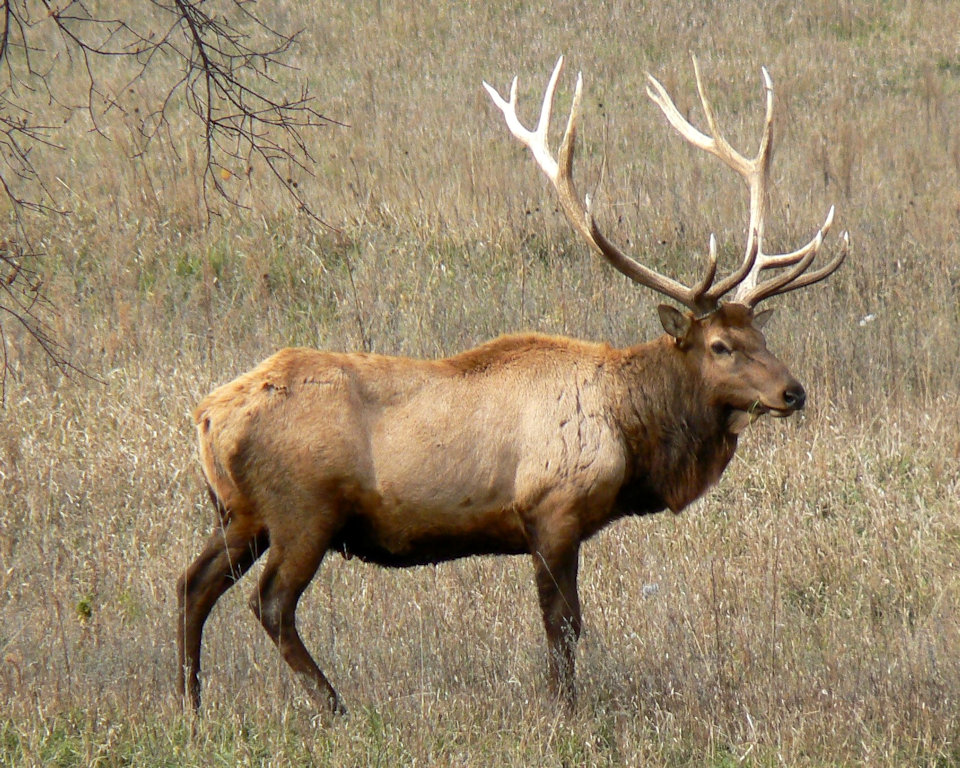
Rocky Mountain bull elk

A coalition of environmental groups is not amused with the Forest Service’s plans to use helicopters to tag elk in the Frank Church River of No Return Wilderness . . .

Three environmental groups sued the U.S. Forest Service to challenge a decision allowing helicopters to land in a central Idaho wilderness area so state wildlife officials can outfit elk with tracking collars.

Wilderness Watch, Western Watersheds Project and Friends of the Clearwater filed the lawsuit Thursday in U.S. District Court in Idaho. They said the federal agency is violating the Wilderness Act and other environmental laws by allowing helicopters into the rugged Frank Church River of No Return Wilderness.

Wilderness areas generally don’t allow mechanized equipment.

Read more . . .

North Fork Interlocal Agreement meeting coming up on Feb. 17

The 2016 winter North Fork Interlocal Agreement meeting will be held Wednesday, February 17 at Montana Fish, Wildlife and Park Region 1 headquarters, 490 N Meridian Rd, in Kalispell. Start time is 10:00 a.m.

The Interlocal Agreement provides for face-to-face contact with representatives of agencies whose policies and actions affect the North Fork. Interlocal Agreement meetings are held in the winter (in town) and summer (at Sondreson Hall). Signatories to the agreement include the Flathead National Forest, Glacier National Park and the Montana Department of Natural Resources and Conservation.

This is always a very interesting meeting, with reports from a range of government agencies and local organizations and often some quite vigorous discussion.

LWCF passes; Trumbull Creek conservation deal looks good

Looks like the Trumbull Creek land deal is a go . . .

A large land conservation deal northwest of Columbia Falls will benefit from passage of the Land, Water and Conservation Fund.

The fund uses off shore oil and gas lease revenue for conservation projects across the U.S. Congress extended the measure for three years when it passed a massive budget bill just before the holidays. Nationwide, Congress appropriated about $450 million to the fund.

Montana’s largest LWCF project this year is the Trumbull Creek conservation easement with F.H. Stoltze Land and Lumber Co. The Trumbull Creek easement is a $9.5 million deal, with $6.5 million from the Forest Legacy program, $2 million from the U.S. Fish and Wildlife Service’s Habitat Conservation Plan program and $1 million from private donations.

Read more . . .

Conservation groups want USFWS to continue wolf monitoring

Gray Wolf

Several conservation groups want the U.S. Fish and Wildlife Service to continue keeping an eye on things in areas where the gray wolf has been delisted . . .

Five conservation groups on Tuesday asked the U.S. Fish and Wildlife Service to extend its oversight of wolves in Montana and Idaho that is set to expire in May.

The agency removed the two states’ gray wolf populations from the Endangered Species List in 2011 after finding they were sufficiently recovered. The delisting order required the Fish and Wildlife Service to continue monitoring the population for five years as the states’ wildlife agencies assume management of the species.

Read more . . .

States divvy up potential Yellowstone region grizzly hunt

Brown Grizzly Bear - Wikipedia User Mousse

You know grizzly bear delisting is getting serious when they start discussing who gets to shoot how many . . .

Wildlife officials have divvied up how many grizzly bears could be killed by hunters in the Yellowstone region of Wyoming, Montana and Idaho as the states seek control of a species shielded from hunting for the past 40 years, according to documents obtained by the Associated Press.

The region’s grizzlies currently are under federal protection, but that could change in coming months, turning control over to the states. A draft agreement detailing the states’ plans for the animals was obtained by The Associated Press.

The agreement puts no limits on grizzly bear hunting outside a 19,300-square mile management zone centered on Yellowstone National Park. Inside the zone, which includes wilderness and forest lands adjacent to the park, hunters in Wyoming would get a 58 percent share of the harvest, a reflection that it’s home to the bulk of the region’s bears. Montana would get 34 percent and Idaho 8 percent.

Read more . . .

Moose population study continues

Moose - Montana Fish, Wildlife and Parks

As mentioned in previous posts here, here and here, Montana’s Moose population is declining and no one is quite sure why . . .

If you went hunting last year, the people at the check station who asked if you had seen any moose weren’t just making conversation.

Those drive-by surveys are part of an ongoing study by Montana Fish, Wildlife and Parks to find out why the massive ungulates have been disappearing from the landscape over the past few decades.

Jesse Newby, a wildlife research technician for Montana Fish, Wildlife and Parks, said the statewide study launched in 2013. He and wildlife biologist Nick DeCesare use aerial flights and radio tracking as their primary tools to monitor moose populations in the Cabinet Mountains, the Big Hole Valley and the Rocky Mountain Front.

Read more . . .

Glacier Institute rolls out 2016 winter courses

The Glacier Institute’s tracking course will be in the North Fork again this winter . . .

The Glacier Institute, a public educational leader in the Crown of the Continent, will kick off 2015 with a course Jan. 9 in animal tracking and sign interpretation. A longtime favorite, the course will return to the North Fork region for the second year after some 20 seasons of exploring in West Glacier.

“There’s awesome tracking along the North Fork—aquatic, riparian, and terrestrial species,” said Director of Education Justin Barth. “There’s a lot of action. If they’re really lucky, they could see rare carnivore tracks, maybe wolves or wolverines. Or [tracks from] a grizzly bear out taking a break from his nap.”

Brian Baxter, a wildlife researcher with years of experience tracking and trapping, will lead the field course, as he has for many years. He’ll lead participants along four or so miles of eastern shore of the North Fork, teaching them to observe the evidence of nature.

Read more . . .

‘Twenty-five grizzly bears a year die in Yellowstone Park, but this one had a name’

Grizzly bear sow with three cubs

Here’s an interesting article that picks up social media’s impact on bear management and runs with it . . .

When a grizzly bear killed a hiker in Yellowstone National Park last year, millions of people took it personally.

“The public response was 100 percent different than two years ago,” said Kerry Gunther, Yellowstone’s bear manager. “Twenty-five grizzly bears a year die in Yellowstone Park, but this one had a name.”

Her name was Blaze, according to the outpouring of outrage on Facebook, Twitter and other social media outlets that appeared within a day of the Aug. 11 incident. Gunther and other park officials still aren’t sure it was that particular, often-photographed sow with two cubs (there were four such females with two cubs in the area). But they are sure their decisions, and all future debate about managing grizzly bears in the Rocky Mountain West, are under a new level of scrutiny.

Read more . . .